ServicesWalkways and Sidewalks
Walkways and Sidewalks in Brea, CA
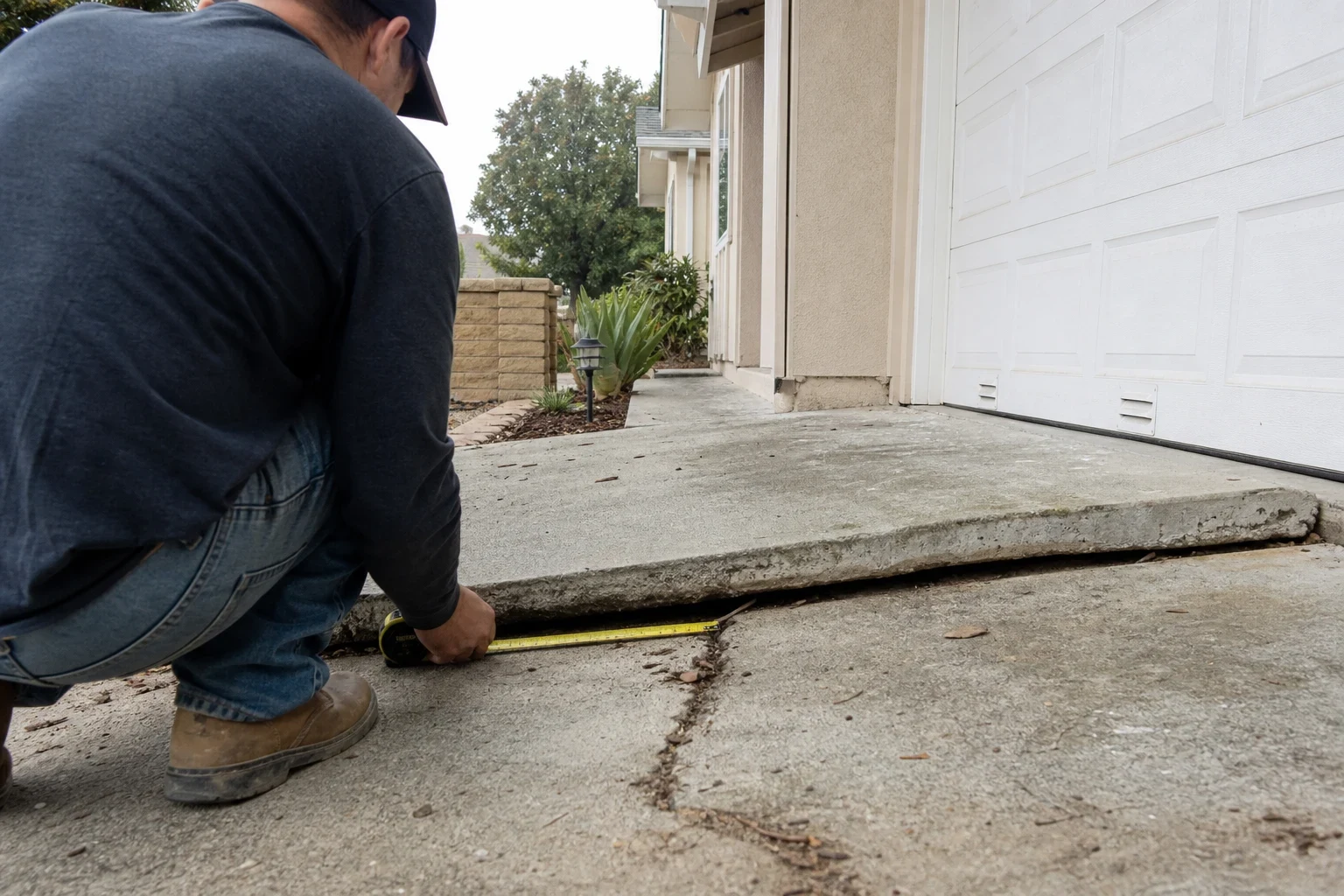
We tear out tired, uneven walkways and pour new concrete paths that sit level, shed water away from your home and feel steady underfoot. If the damage might be part of an insurance claim, we photograph and measure everything first so you have clear records for your adjuster.
A path you can walk without watching your feet
A walkway gets more daily use than almost any other concrete at your home. Guests, delivery drivers and kids on scooters all cross it, so a raised edge or a sunken panel is more than a looks problem. It is a trip hazard and a place for water to collect.
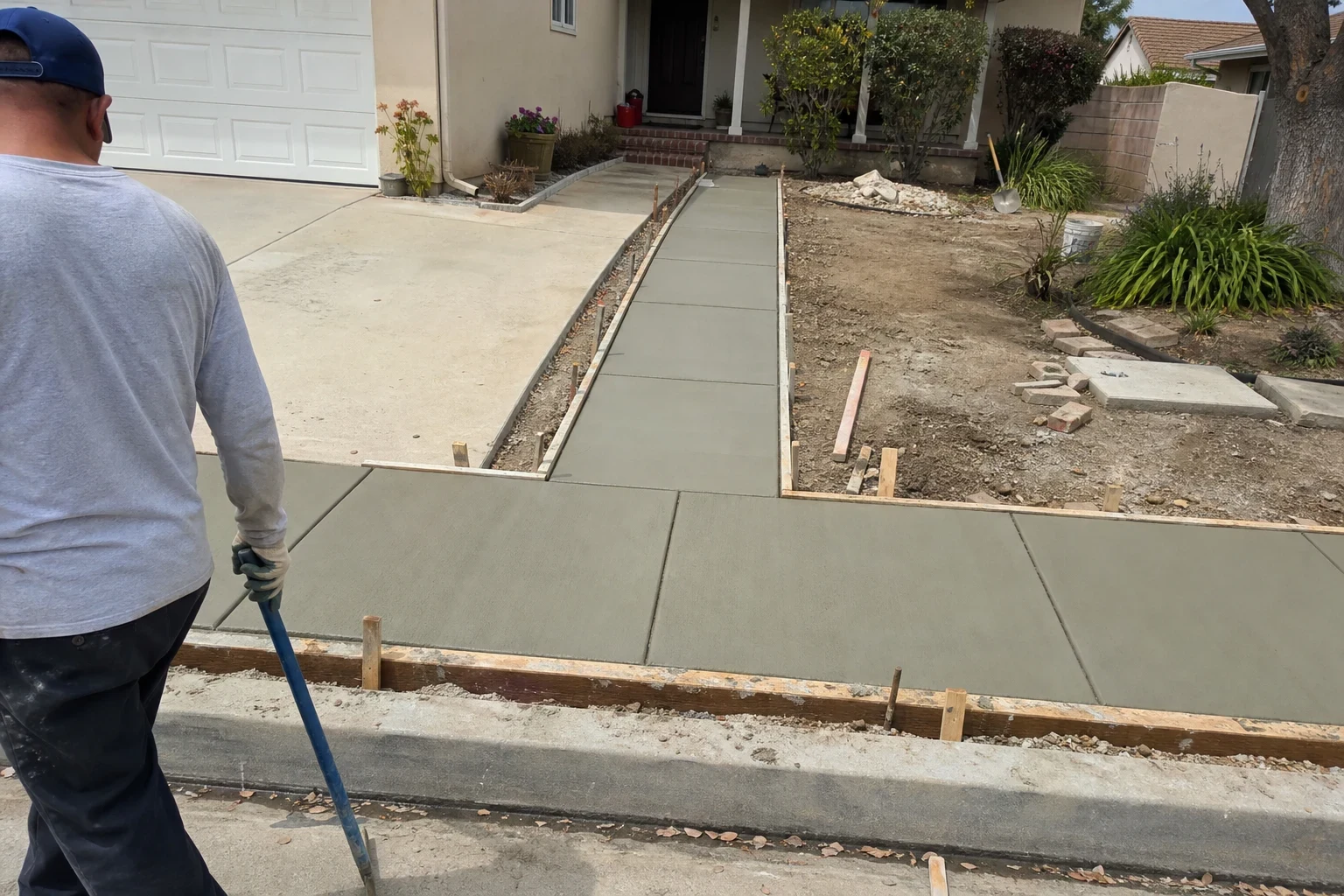
We build new walkways and sidewalks from the ground up: the old concrete comes out, the soil gets prepared properly, and the new path is formed, reinforced, sloped and finished to suit your home. The clay-heavy soils common around Brea swell when wet and shrink in dry months, which is why the base and the joint layout matter as much as the concrete itself.
Some walkways break because of a single event, like a car rolling over the edge or a broken water line washing out the soil. In those cases we document the damage before we touch it and explain how the claim process usually works. Your insurer decides what is covered; we make sure you have accurate photos, measurements and a written estimate to share.
What goes into a new walkway
- Removal and haul-off
- We saw-cut cleanly where the new work meets concrete you are keeping, break out the old path and haul the debris away. Your lawn and planting beds get protected along the edges.
- Base prep and compaction
- We dig to the right depth, remove soft or root-filled soil and compact a layer of base rock. A firm, even base is what keeps panels from settling unevenly later.
- Forms, slope and reinforcement
- Forms are set so the walk falls gently away from your foundation and doesn't send rain toward the house. We add steel reinforcement and an expansion joint where the path meets your home or steps.
- Joints where cracks want to go
- Concrete shrinks as it cures, and some cracking is natural. We cut or tool control joints at planned spacing so those cracks follow straight lines instead of wandering across the panels.
- A finish that suits the spot
- Most walkways get a light broom finish for grip when wet. If you want pattern or color to tie into a patio, we can talk through options from our Stamped Concrete work.
- Cleanup and care notes
- We clean up the work area, pull the forms once the concrete has set and walk you through when it's safe to step on, roll a trash bin over and water nearby plants.
Signs your walkway is ready to be replaced
Lips you catch a toe on
When one panel sits higher than the next, the edge becomes a trip point. Even a small lip is easy to miss at night.
Roots lifting the slabs
Tree roots growing under a walk push panels up and crack them. Replacement is a chance to trim roots properly and rebuild the base.
Water pooling or running toward the house
A sunken walk can hold puddles or channel rain against your foundation. Correct slope fixes the flow.
Flaking, crumbling surface
When the top layer scales off and exposes gravel, the concrete is wearing out and gets rougher every season.
Damage after a specific event
A vehicle, a broken pipe or heavy equipment can crack a walk in one day. Take photos before anything is moved, and we will add measured photos of our own.
A path that never worked
Too narrow for two people, awkward bends or no walk where everyone actually cuts across the lawn. A new layout can fix how you move around your home.
What shapes the cost of a walkway
Every walkway is priced from its own measurements and site conditions, so we don't quote a number before we see it. After the visit, your written estimate breaks the job into parts, so you can see where the money goes and adjust the scope if you want.
Length, width and layout
More square footage means more base rock, concrete and labor. Curves and extra steps or landings take more forming time than a straight run.
Removing the old concrete
Thick or heavily reinforced old walks take longer to break out and weigh more to haul away.
Roots and soil underneath
Root removal, soft spots or extra base material add work, but skipping them shortens the life of the new walk.
Access to the work
A walk we can reach with a wheelbarrow from the driveway is simpler than one tucked behind the house where everything moves by hand.
Finish and permits
A broom finish is the most straightforward. Color, stamped patterns or work in the public right of way that needs a city permit add to the total.
How your walkway project runs
- 1
Phone call and site visit
You tell us what is going on, and we set a time to come out. We measure, check the grade and look at roots, drainage and how the walk connects to your driveway or steps.
- 2
Written estimate and permit check
You get a line-item estimate that shows removal, base work, concrete and finish separately. If any part of the work touches the public sidewalk or parkway, we check what the city requires before scheduling.
- 3
Tear-out and prep day
We remove the old concrete, prepare and compact the base, then set forms and reinforcement. You can see the slope and layout before anything is poured.
- 4
Pour and finish
In warmer months we often pour in the morning so the concrete doesn't set too fast in the afternoon heat. We place, level and finish the walk, then cut the joints at the right time.
- 5
Curing and first steps
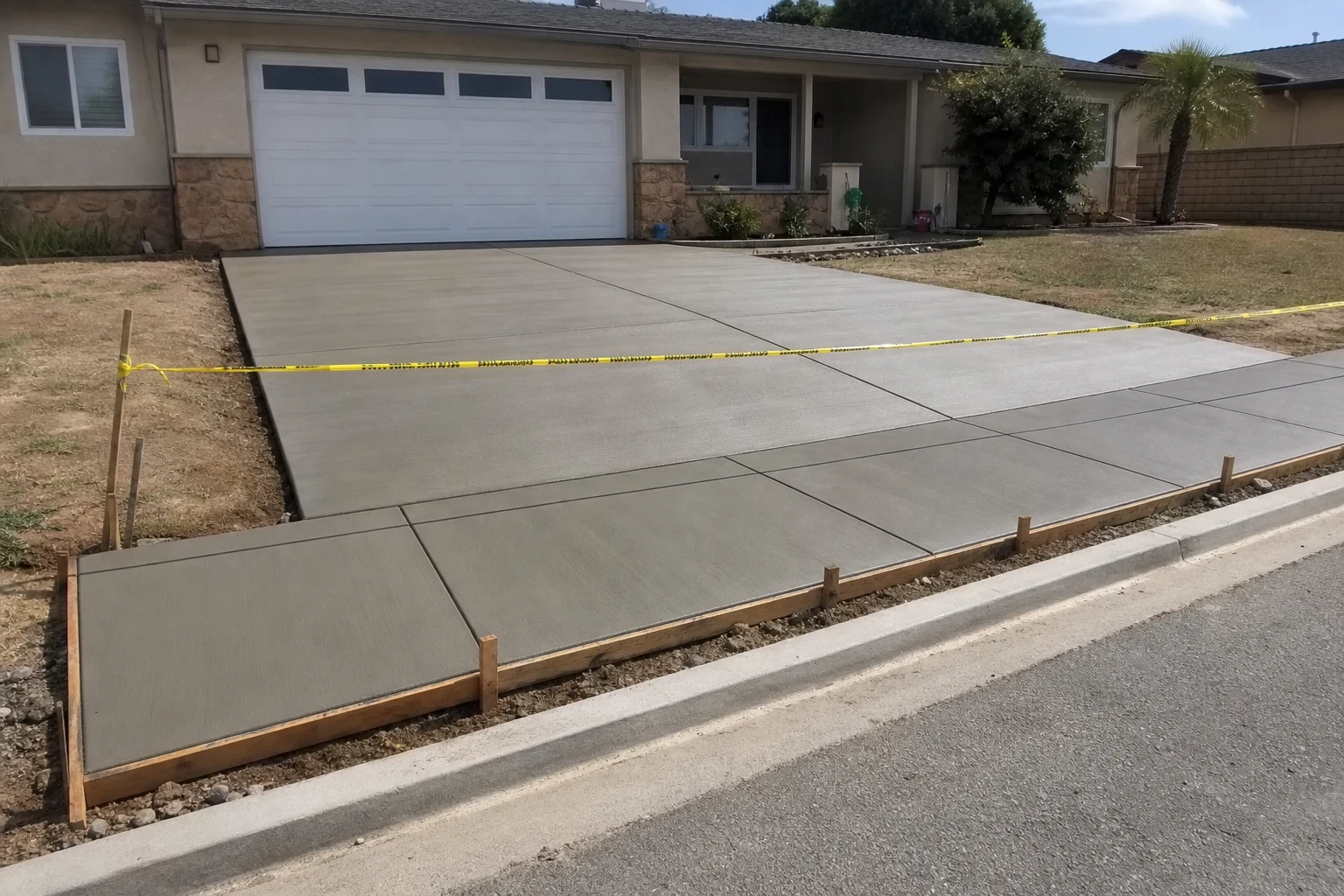
We tape off the walk and let you know when foot traffic is fine, usually after a day or so. Heavier loads wait longer while the concrete gains strength.
Walkway and sidewalk questions
Will my insurance pay for a damaged walkway?
It depends on your policy and what caused the damage. A sudden event like a vehicle or a burst line is treated differently from slow wear or tree roots. We don't act as your adjuster, but we provide photos, measurements and a written estimate you can send to your insurer.
Can you pour new concrete over my old walkway?
We don't recommend it. Pouring over cracked or lifted concrete carries the old problems into the new surface and can raise the walk above the steps or door threshold. Tearing out and rebuilding the base gives you a path that lasts.
Do I need a permit for the sidewalk in front of my house?
Work on a private walk to your door usually doesn't, but the public sidewalk and parkway are often a different story. We check what the city requires for your address before we schedule the pour.
Can I keep the tree that lifted my old walk?
Often, yes. We can trim roots near the walk, sometimes adjust the path to give the tree more room, and suggest talking to an arborist before cutting any large roots.
How soon can we use the new walkway?
Light foot traffic is usually fine after about a day. We'll tell you when it's okay for bins, carts or anything heavier, since concrete keeps gaining strength for weeks.
Ready for a walkway that feels solid again
Tell us about your walkway or sidewalk, and we'll set up a visit to measure and look at what is underneath. If insurance might be involved, we'll start with photos before anything changes.