ServicesStamped Concrete
Stamped Concrete in Brea
Stamped concrete gives your home the look of stone, slate or brick at a fraction of the upkeep of pavers. We pour new slabs, press in the pattern while the concrete is still workable, add color and seal it so it looks good for years.
A patterned finish on one solid slab
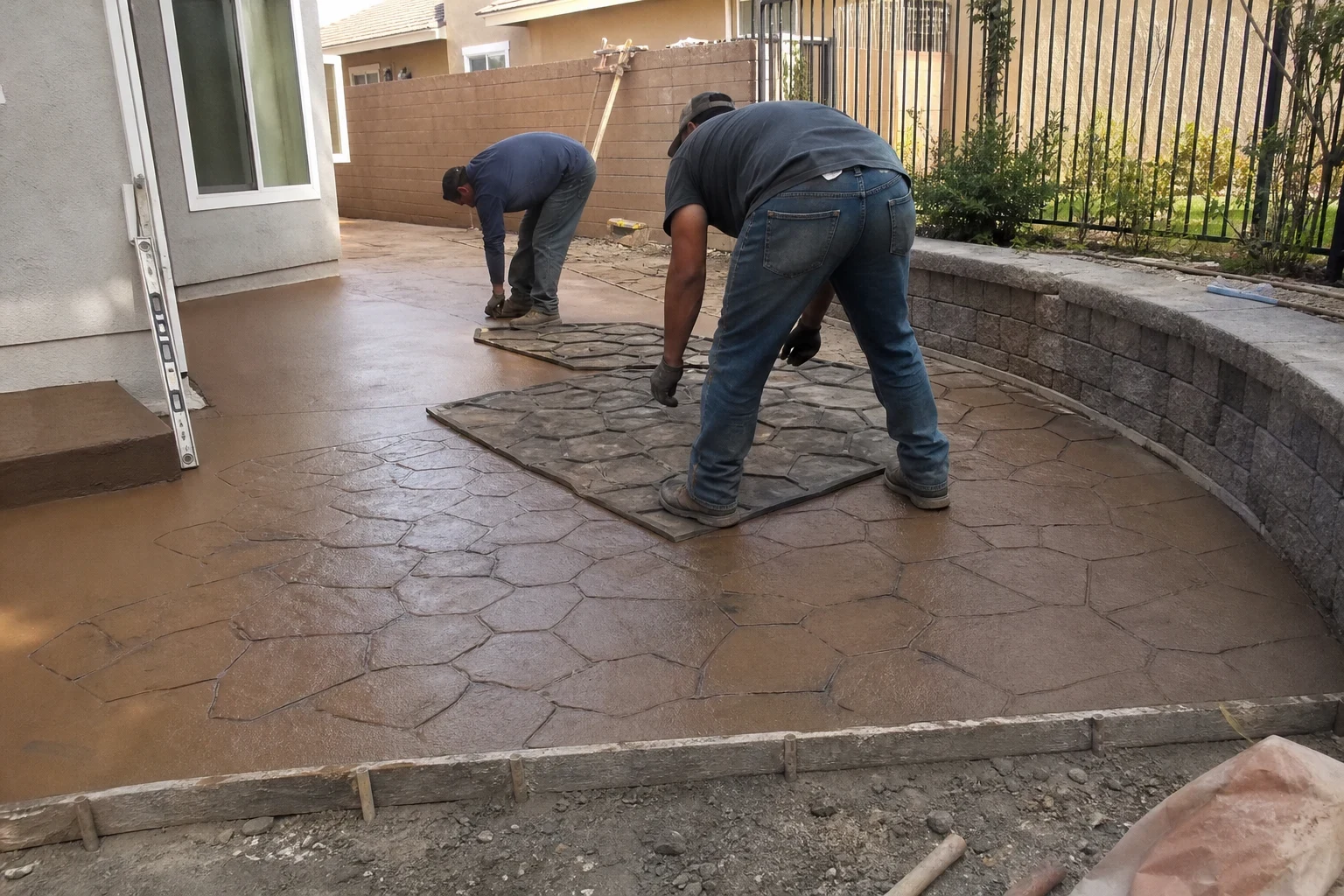
Underneath the pattern, stamped concrete is a reinforced slab like any other. The difference happens while it is still soft: our crew presses rubber mats into the surface to leave the texture of ashlar slate, cobblestone or weathered wood, and a color hardener or integral pigment gives it a natural tone. You end up with one continuous surface, so there are no joints for weeds to push through and no loose pieces to shift.
Homeowners usually choose it for patios, front walks, pool surrounds and driveways when a broom finish feels too plain. If the slab you have now is cracked, sunken or worn out, we tear it out and pour new stamped concrete in its place. And if a simpler finish suits the space better, our Patios and Driveways pages cover those options.
What your stamped concrete project includes
- Pattern and color samples
- We bring sample boards so you can see patterns and colors in your own daylight, next to your stucco and roof. Colors look different outdoors than in a photo, so this step saves surprises.
- Removal and base prep
- If there is an old slab, we break it out and haul it away. Then we grade, compact and add base rock so the new concrete sits on firm, even ground.
- Forms, rebar and drainage slope
- We set forms to the final shape and tie in rebar for strength. Every slab gets a gentle slope away from your home so water runs off instead of pooling against the foundation.
- Coloring and stamping
- Color goes in while the concrete is fresh, followed by a release agent that adds antiquing shadows. Our crew stamps in sections as the surface reaches the right firmness, which is the part that takes the most experience.
- Control joints and sealing
- We cut joints along pattern lines so they blend in and guide where the slab can crack. After curing, we apply a sealer that deepens the color and protects against stains and sun fading.
Signs stamped concrete is the right call for your home
Your patio feels plain
A gray broom-finish slab works, but it rarely feels like an outdoor room. Pattern and color change that without a full landscape redesign.
Pavers keep shifting
Loose pavers, weeds in the joints and ant hills in the sand are common complaints. A single stamped slab ends that ongoing weeding and resetting.
The old slab is past saving
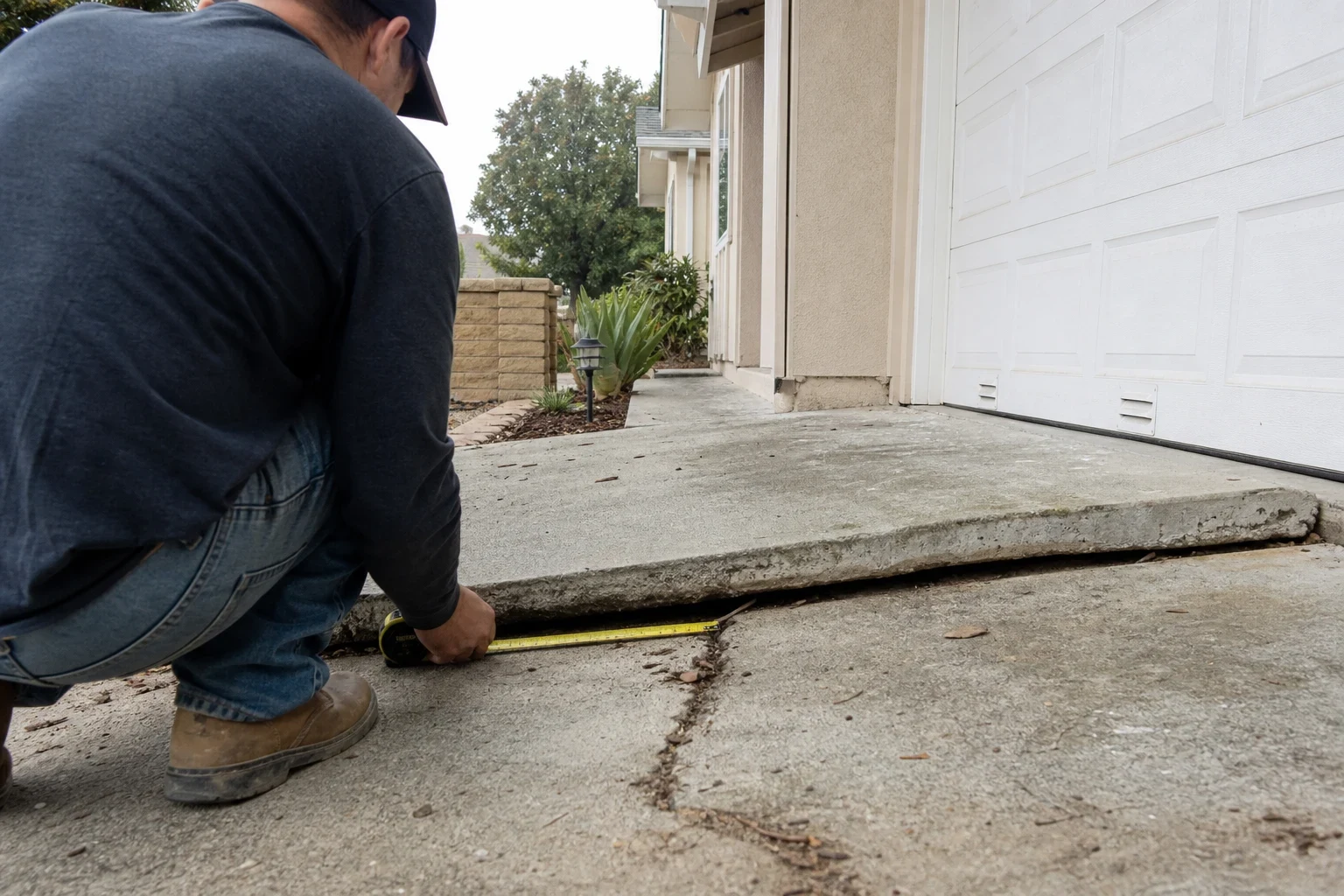
Wide cracks, raised edges or sections that have sunk are trip hazards. When a slab is in that shape, replacing it with new stamped concrete is often the better use of your budget.
Damage after a covered event
If a falling tree, a vehicle or a broken water line ruined your concrete, insurance may help cover replacement. We can photograph the damage and give you a line-item estimate to share with your adjuster.
You want stone without the price
Real flagstone and slate are beautiful but costly to set. Stamped concrete gets close to that look on a more manageable budget.
What affects the cost of stamped concrete
Every stamped job is priced from what we see at your home, not from a chart. The pattern you choose matters, but so does what is underneath and how easy it is to get a truck close. Your written estimate shows each of these pieces separately.
Size and shape
Larger areas cost more overall but often less per square foot. Curves, steps and tight corners add form work and hand stamping time.
Pattern and color layers
A single color with one release tone is the simplest. Multiple colors, hand-applied accents or border bands take more material and labor.
Removal and soil
Breaking out and hauling an old slab adds to the job. The expansive clay soil common around Brea sometimes needs extra base rock to keep the new slab stable.
Access to the work area
If a concrete truck can reach the pour, the day moves quickly. Narrow side yards or backyards behind a fence may need a pump or wheelbarrows.
Sealer choice
Standard sealers protect color and resist stains. Sealers with added grit for traction, often used around pools, cost a little more.
How a stamped concrete job runs
- 1
Walkthrough and written estimate
We measure the area, check access and drainage, and talk through patterns and colors. Afterward the estimate comes to you in writing, broken out by removal, base work, pattern, color and sealer, so every dollar has a clear purpose.
- 2
Prep day
Our crew removes old concrete if needed, grades the soil and compacts the base. Forms and rebar go in, and we confirm the layout with you before any concrete arrives.
- 3
Pour and stamp
The concrete is poured, leveled and colored, then stamped in sections. Stamping has to happen in a tight window, so the crew works steadily until the whole surface is done.
- 4
Curing and sealing
We cut control joints, rinse off the release agent and let the slab cure. Once it is ready, we seal it, clean up the site and walk you through care.
Stamped concrete questions we hear often
Is stamped concrete slippery when wet?
Sealed stamped concrete can get slick, especially in deeper smooth patterns. We can mix a fine anti-slip grit into the sealer, which we recommend around pools and on sloped walks. Textured patterns like slate also give better footing than smooth ones.
Will my stamped concrete crack?
All concrete can develop small cracks as it shrinks and the ground moves. We use rebar, a compacted base and control joints cut along pattern lines so any cracking follows those joints where it is hard to see.
How soon can we use it?
Light foot traffic is usually fine after a day or two. Furniture and grills should wait about a week, and driveways need about a week before parking a car. Concrete keeps gaining strength for roughly a month.
How often does it need resealing?
Most stamped surfaces look best with a fresh coat of sealer every two to three years. Areas with full sun or pool water exposure may need it sooner. When the color starts looking dull or water stops beading, it is time.
Can you help with an insurance claim for damaged concrete?
We do not act as your adjuster or promise what a policy covers. What we can do is photograph the damage, explain what we see and put together a written replacement estimate you can pass along to your insurer with your claim. If your adjuster has questions about the estimate, you are welcome to give us a call and we will walk through it with you. Your insurer makes the coverage decision.
Ready to see patterns for your home?
Tell us about the space and what you have in mind. We will set up a time to measure, bring samples and put a written estimate in your hands.