ServicesConcrete Garage Floors
Concrete Garage Floors in Brea
A garage floor carries your cars, your workbench and years of oil and water. When it has cracked, sunk or started holding puddles, we tear it out and pour a new slab on a properly compacted base, sloped so water heads out the door.
A new slab when the old one has given up
Most garage floors around here were poured as a single four-inch slab. Over time, soil movement, water from a leaking heater or washer, and the weight of vehicles can leave it cracked through, uneven or tilted the wrong way. At that point a fresh pour is usually the cleaner, longer-lasting fix.
We also walk you through the insurance side when something sudden caused the damage, like a burst supply line that washed out the soil under the slab. We take dated photos and measurements of what we find and explain how claims of this kind usually go. Your adjuster makes the coverage call, and we will not promise you an outcome we cannot control.
What a garage floor job includes
Protection and tear-out
We cover nearby walls, the water heater and anything left in the garage. Then we saw-cut the old slab cleanly along the door and edges and haul the broken concrete away.
Base preparation
We check the soil under the old slab, remove anything soft or washed out, and add and compact a fresh gravel base. A floor is only as steady as what sits under it.
Reinforcement
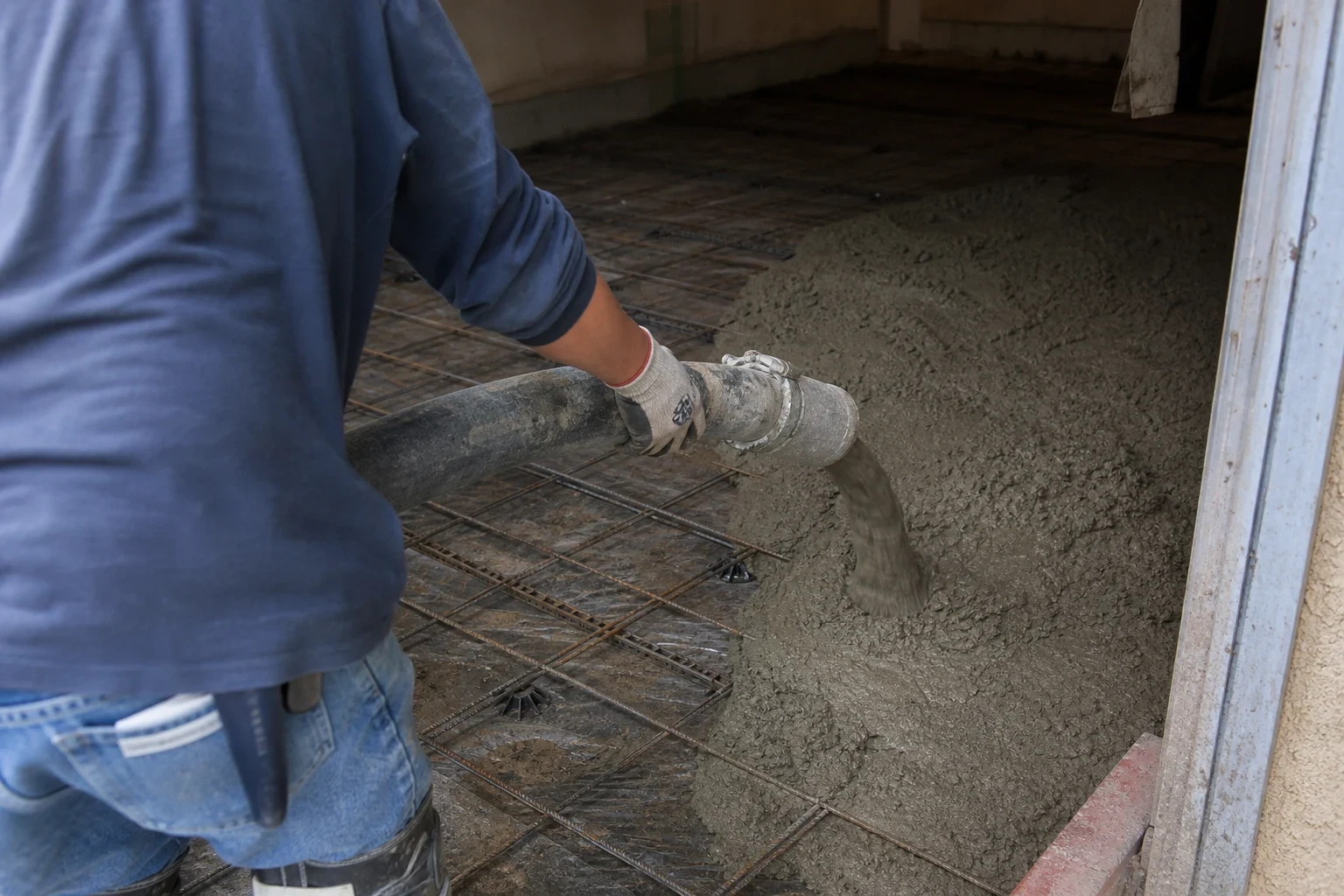
Rebar or welded wire is raised on small supports so the steel ends up near mid-depth in the concrete, the spot where it adds strength. Steel left lying on the dirt does very little.
Slope and control joints
We set forms so the finished floor falls gently toward the garage door. Control joints are cut in so any shrinkage cracks follow straight lines you planned for.
Finish you can live with
A smooth trowel finish is easy to sweep and takes a sealer or coating later. A light broom finish gives more grip if the floor tends to get wet.
Signs it is time for a new garage floor
- Cracks wider than a coin
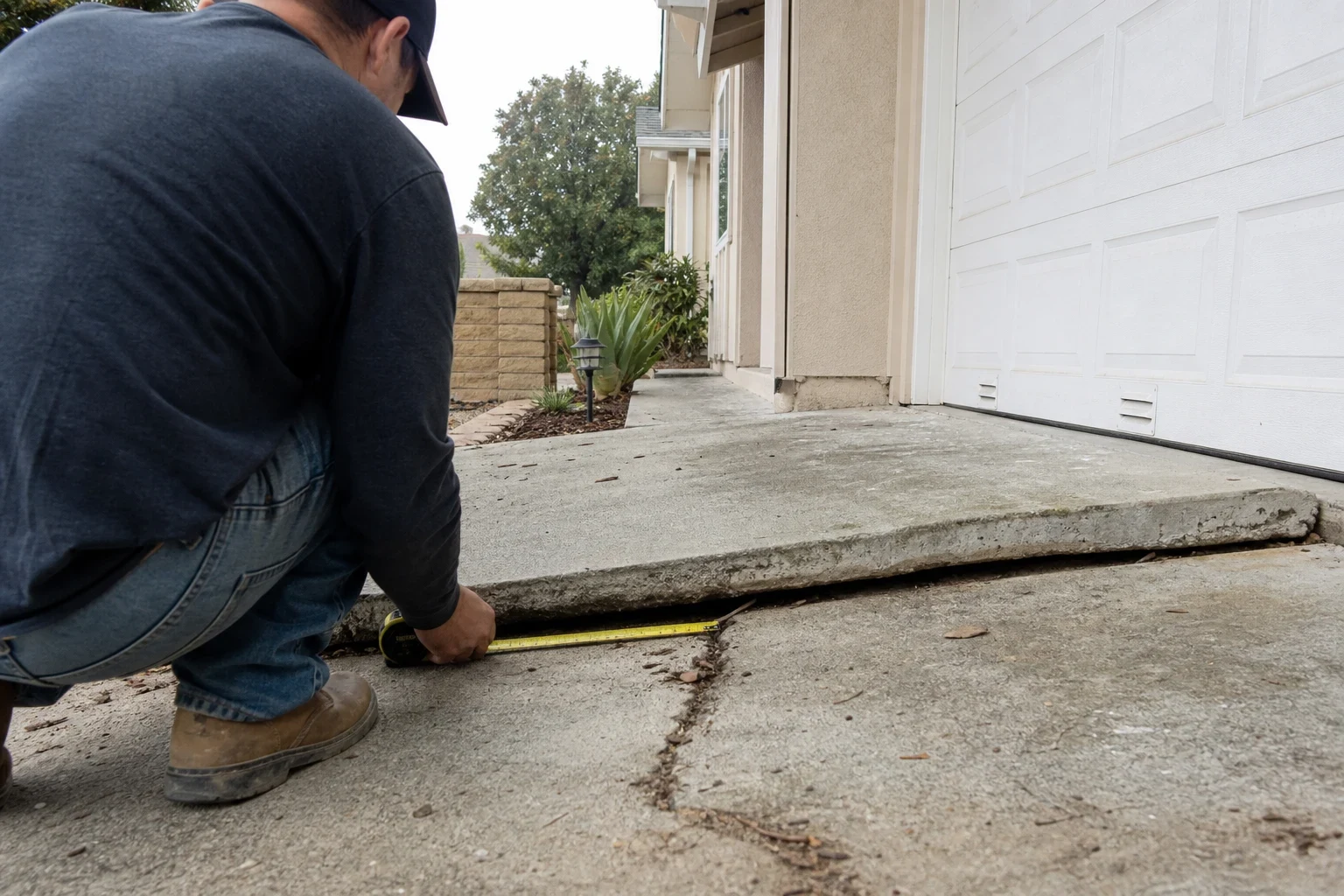
- Hairline cracks are normal in concrete. Cracks you can slip a coin into, especially with one side higher than the other, point to movement below the slab.
- Water pools instead of draining
- If water from washing the car or a wet tire sits in the middle of the floor, the slope is gone or was never there.
- A sunken section near a leak
- A dip near the water heater, washer or a past plumbing leak often means water carried soil away underneath. Photos taken before tear-out matter here if you plan to file a claim.
- Crumbling surface
- Flaking, pitted or dusty concrete keeps shedding grit onto everything you store and will not hold a coating well.
- Trip edges at the door
- When the floor and the driveway meet at different heights, it is hard on ankles and on whatever you roll in and out.
How the work goes
- 1
A walk-through and a written estimate
We look at the floor with you, measure, and check how the garage door, drain and driveway meet the slab. You get a written estimate with each part of the work listed, so nothing shows up later as a surprise.
- 2
Documentation for your claim
If insurance may be involved, we photograph the damage, the cause where we can see it, and the soil once the slab is open. You pass those to your adjuster, and we answer their questions about the work.
- 3
Permit check and scheduling
We confirm with the city whether your job needs a permit and handle it if so. Once a start date is set, you will know how many days to plan on parking somewhere else.
- 4
Demo, prep and pour
Tear-out and base work usually come first, with the pour once the forms and steel are set. In hot, dry weather we keep the fresh concrete damp so it cures evenly instead of cracking early.
- 5
Curing and handoff
Foot traffic is generally fine after a day or two, while your cars should wait roughly a week before coming back in. Before we leave, we clean up and haul off the debris, then tell you when the slab is ready for a sealer or epoxy coating.
What moves the price of a garage floor
Two garages of the same size can end up with quite different estimates. The biggest swings usually come from the soil we find once the old concrete is out and from how readily a crew and a concrete truck can reach the garage. Every line on your estimate gets explained before anyone picks up a saw.
- Size and thickness
- A one-car garage needs far less concrete than a three-car. A heavy truck or a workshop with big tools may call for a thicker slab.
- Condition of the soil
- Soil that has washed out or swells when wet has to be dug out and replaced with compacted base, which adds labor and material.
- Access
- A narrow driveway or a garage set far back from the street can mean wheelbarrowing the concrete or bringing in a pump.
- Finish and extras
- A trowel finish, a floor drain, or a matching apron where the floor meets the driveway each change the scope.
Garage floor questions we hear often
- Will my homeowner's insurance pay for a new garage floor?
- It depends on the cause and your policy. Many policies exclude settling and normal wear, while sudden events like a burst pipe may be treated differently. We document what we find and explain how these claims usually work, but your adjuster decides coverage.
- How long will I be without my garage?
- Plan on the tear-out and pour taking a few days, then about a week before you park on the new slab. We give you the timeline for your job up front so you can move cars and storage ahead of time.
- Do I need to empty the garage completely?
- Yes, the floor needs to be clear. Items hung on walls or shelves bolted up high can often stay, and we cover them during demo to keep dust down.
- Can I put epoxy on the new floor?
- You can, once the concrete has cured, which generally takes about four weeks. We finish the slab smooth so a coating has a good surface to bond to.
- Can you match the new floor to my driveway?
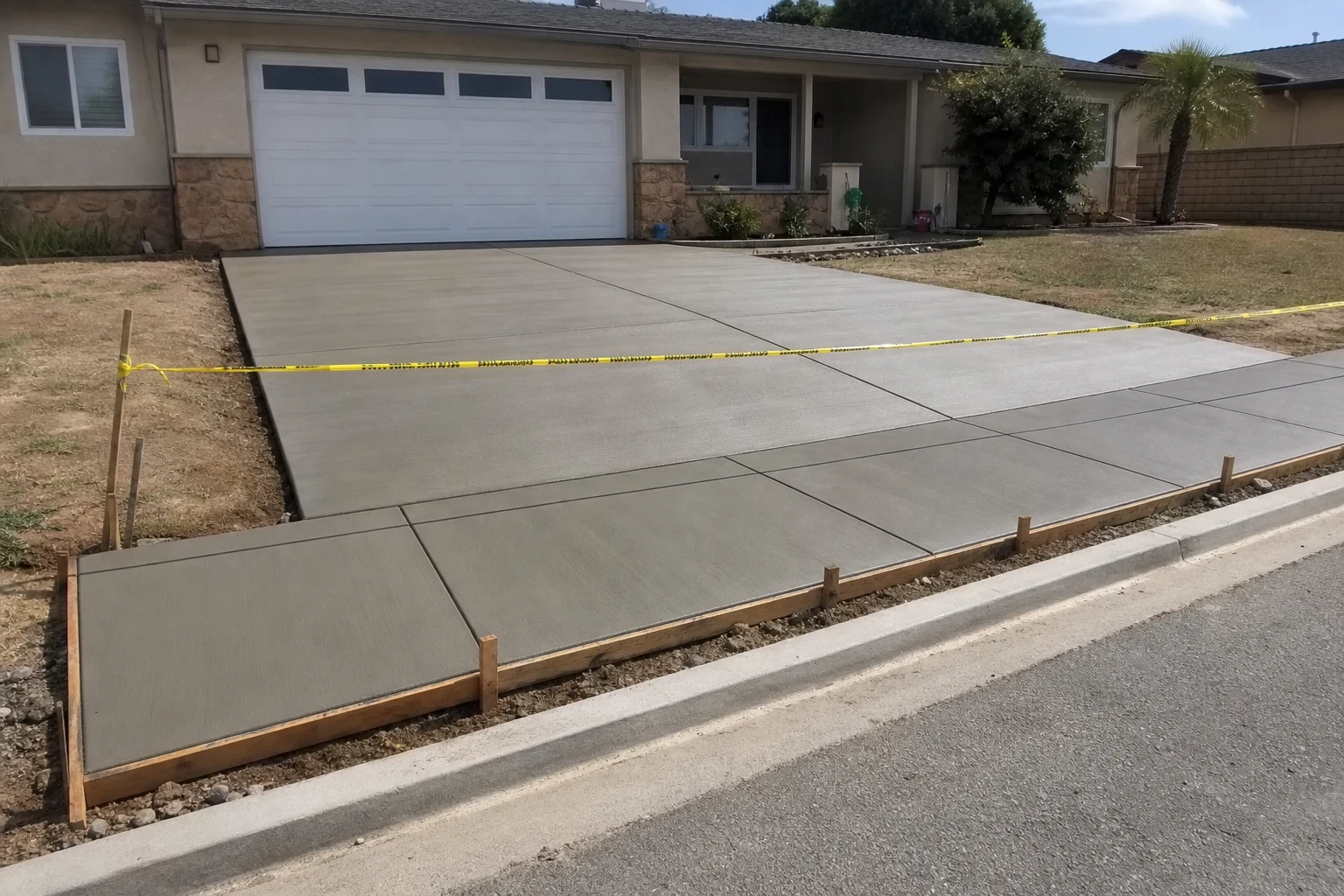
- We set the floor height so it meets the driveway cleanly at the door. If the driveway itself needs replacing, our Driveways page covers that work, and doing both together can simplify scheduling.
Let's look at your garage floor together
Tell us what the floor is doing and whether insurance might be involved. We will pick a time to come out, take measurements and explain each step of pouring a new floor.