ServicesRV Parking Pads
Concrete RV Parking Pads in Brea
We build RV pads thick enough for a loaded coach, reinforced with steel and set on a compacted base so the slab stays flat for years. You get a clear plan for size, access and drainage before anything is dug.
A Pad Made for Real Weight
An RV is not a car. A loaded motorhome or fifth wheel puts far more weight on each tire, and it often sits in one spot for months. A standard walkway or patio slab will crack and settle under that load. An RV parking pad is built differently from the ground up: a deeper, better-compacted base, a thicker slab and a rebar grid that spreads the weight.
Most of the pads we pour go in a side yard, beside the driveway or at the back of the lot, where you need room to park and a straight path to get in. We walk the space with you, measure your rig, and check gate width, overhead clearance and the turn from the street.
If you are replacing an old pad that was damaged by a falling tree or a vehicle, we can photograph what we find and give you a written breakdown to share with your insurance company. We explain how that usually goes, but your adjuster decides what is covered.
What Your RV Pad Includes
Layout sized to your rig
We measure your RV's length, width and slide-outs, then add room to open doors and walk around it. The pad is staked out so you can see the footprint before we dig.
Excavation and compacted base
We dig out soft soil and roots, then bring in base rock and compact it in layers. Clay soils swell when wet and shrink when dry, and a solid base keeps that movement from reaching the slab.
Thicker slab with rebar
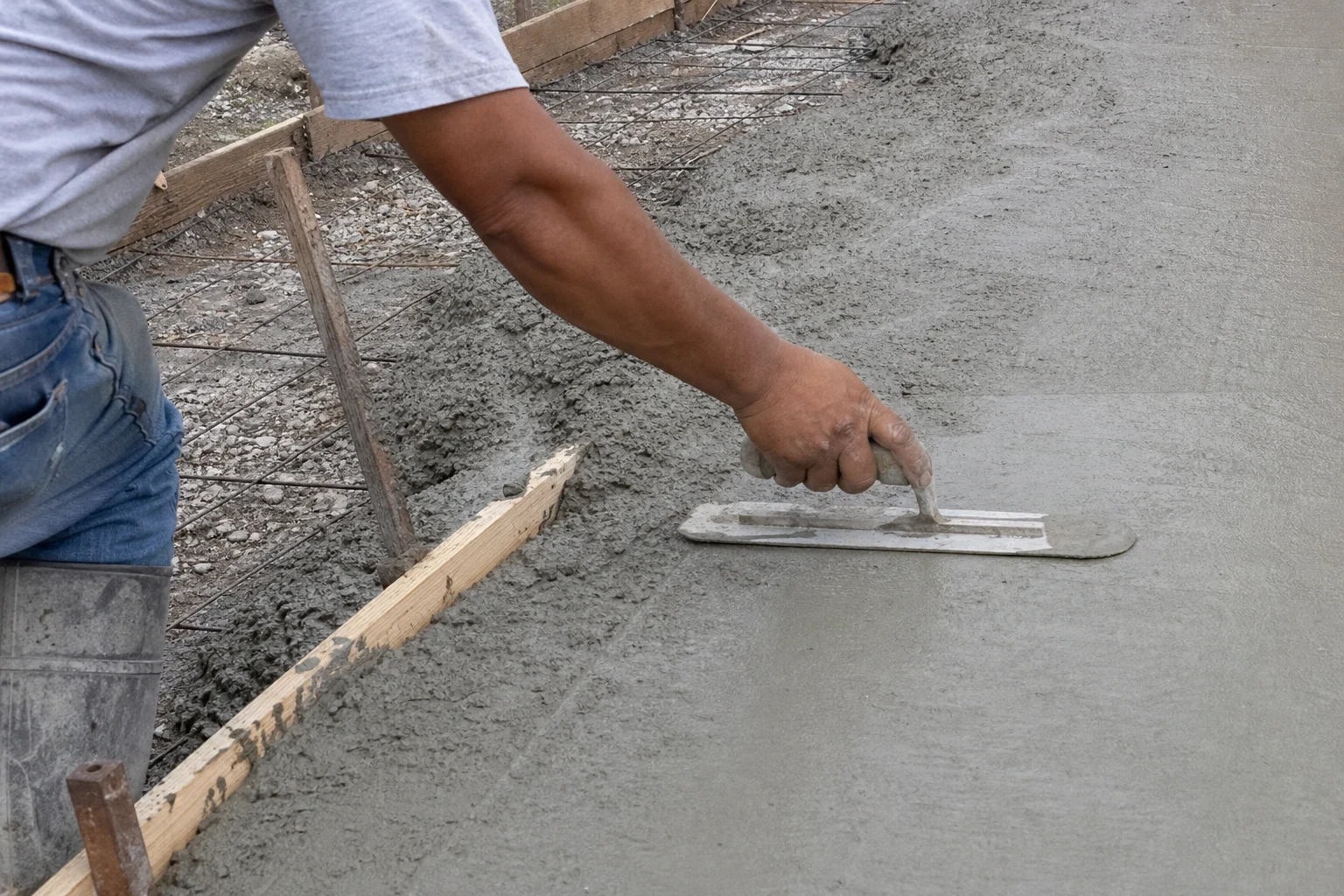
RV pads are poured thicker than a typical walkway or patio and reinforced with a rebar grid. That steel holds the slab together under concentrated tire loads.
Slope and drainage
We set a gentle fall so rain and wash water run off toward the street or a drain, not toward your house or under the RV.
Control joints and finish
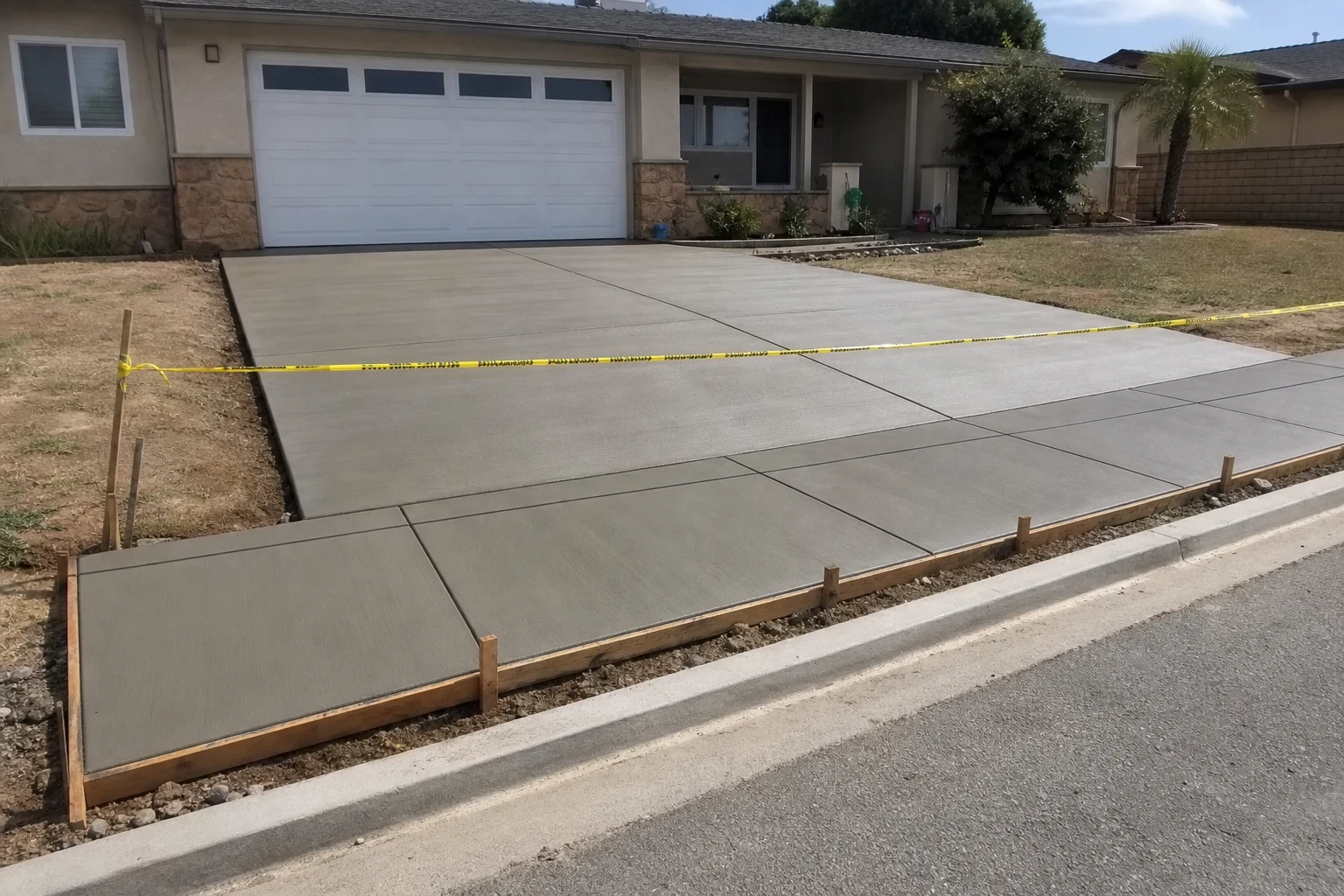
Joints are cut where the slab wants to crack so any movement stays in a straight line. A broom finish gives your tires and your shoes grip when it is wet.
Sleeves for future hookups
If you want power or water at the pad later, we can leave a sleeve under the concrete before the pour so nobody has to cut it open.
Signs It's Time for an RV Pad
- Ruts in the dirt or gravel
- Tires sink after rain and leave tracks that dry hard. Parking on soft ground also tilts the RV and stresses the frame.
- Your driveway is cracking
- A driveway poured for cars often cracks or sinks where the RV sits. Moving the rig onto its own pad protects the driveway you already have.
- Weeds and mud under the coach
- Plants growing up under an RV hold moisture against the undercarriage. A concrete pad keeps it clean and dry.
- An old pad that is breaking apart
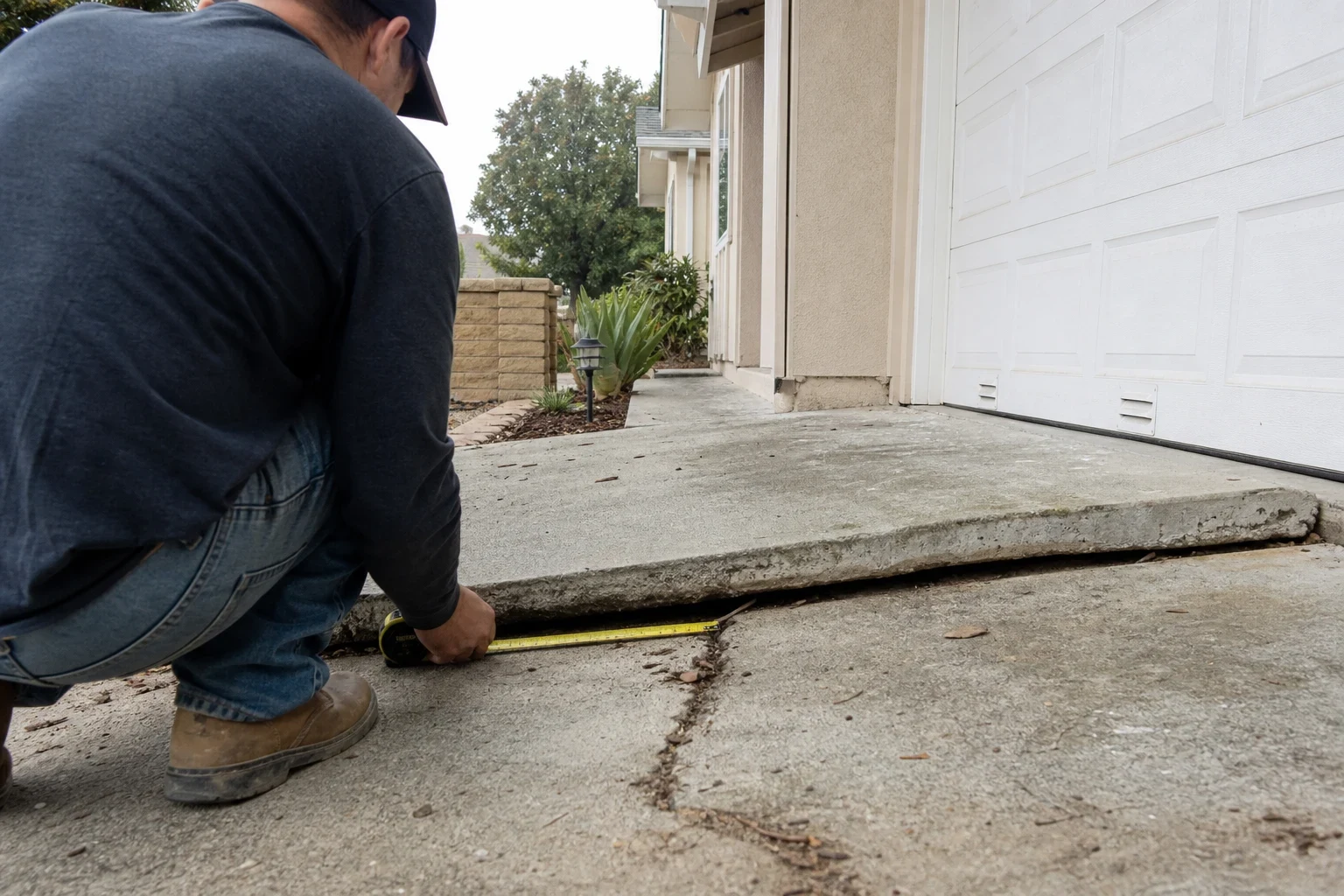
- A thin slab with no steel will crack into pieces under a heavy coach. When it has settled or broken up, tearing it out and pouring a proper pad is usually the honest answer.
- A new RV or a bigger one
- If you are upgrading, the space you have may be too short or too narrow. Planning the pad first saves a tight squeeze later.
How the Job Goes
- 1
Site visit and measurements
We look at the space, measure your RV and check access from the street. We ask about any HOA rules and whether a city permit applies, such as for a new driveway approach.
- 2
Written estimate
You get a line-item estimate showing size, thickness, base work, steel and any tear-out. Nothing is hidden in a lump sum.
- 3
Dig, base and forms
We remove old concrete or soil, compact the base and set the forms and rebar. If your home is close by, we protect walls, plants and the driveway as we work.
- 4
Pour and finish
The concrete is placed, leveled, finished and jointed in one day. We clean up the site before we leave.
- 5
Cure before you park
Concrete gains strength over weeks. We tell you when cars can go on it and when it is ready for the full weight of the RV, which takes longer.
What Shapes the Price
No two RV pads cost the same, because each one is priced from your measurements and your ground. Most of the difference comes from how big the slab is and how much prep the soil needs before concrete goes in. Your written estimate lists every line on its own, so nothing is buried in a single total.
- Length and slab depth
- A longer coach means a longer pad, and a heavier rig calls for a deeper slab with more steel in it. Both raise the amount of concrete and the hours on site.
- Ground prep under the slab
- Soft or clay-heavy soil may need deeper digging and extra base rock. Homeowners often don't see this one coming, so we look at it on the first visit.
- Removing what's there now
- Breaking out an old slab, scraping up gravel or pulling a lawn takes extra time and adds dump fees.
- Getting the concrete in
- When the mixer can back up close to the forms, the pour moves fast. A narrow side yard may mean bringing in a pump or running wheelbarrows.
- Permits and add-ons
- A wider curb cut, sleeves for future hookups or a decorative border each widen the scope of the job.
RV Pad Questions
- How thick should an RV pad be?
- Thicker than a car driveway, with a rebar grid instead of thin wire mesh. The right thickness depends on your RV's weight and your soil. We recommend a specific number after we see the site and the rig.
- How long until I can park my RV on it?
- Light foot traffic is usually fine within a day or two, and cars a bit after that. A heavy RV should wait several weeks while the concrete gains strength. We give you dates for your pad before we leave.
- Do I need a permit for an RV pad?
- It depends on the work. A pad on your own lot often needs nothing, but a new or wider driveway approach at the curb usually does. We check with you during the site visit and handle the permit when one is needed.
- Will insurance pay to replace my damaged RV pad?
- Sometimes, if the damage came from a covered event like a fallen tree. Normal cracking from age or a thin slab usually is not covered. We document what we find with photos and a written estimate, and your adjuster makes the decision.
- Can the pad match my driveway?
- Yes. We can match a plain broom finish, or tie it in with a stamped concrete border. Color can be close, but new concrete rarely matches old concrete exactly at first.
Ready to Get Your RV Off the Dirt
Tell us about your rig and where you want to park it. We will set up a time to measure the space and walk you through the options, from Brea to Yorba Linda and Fullerton.