ServicesSide Yards
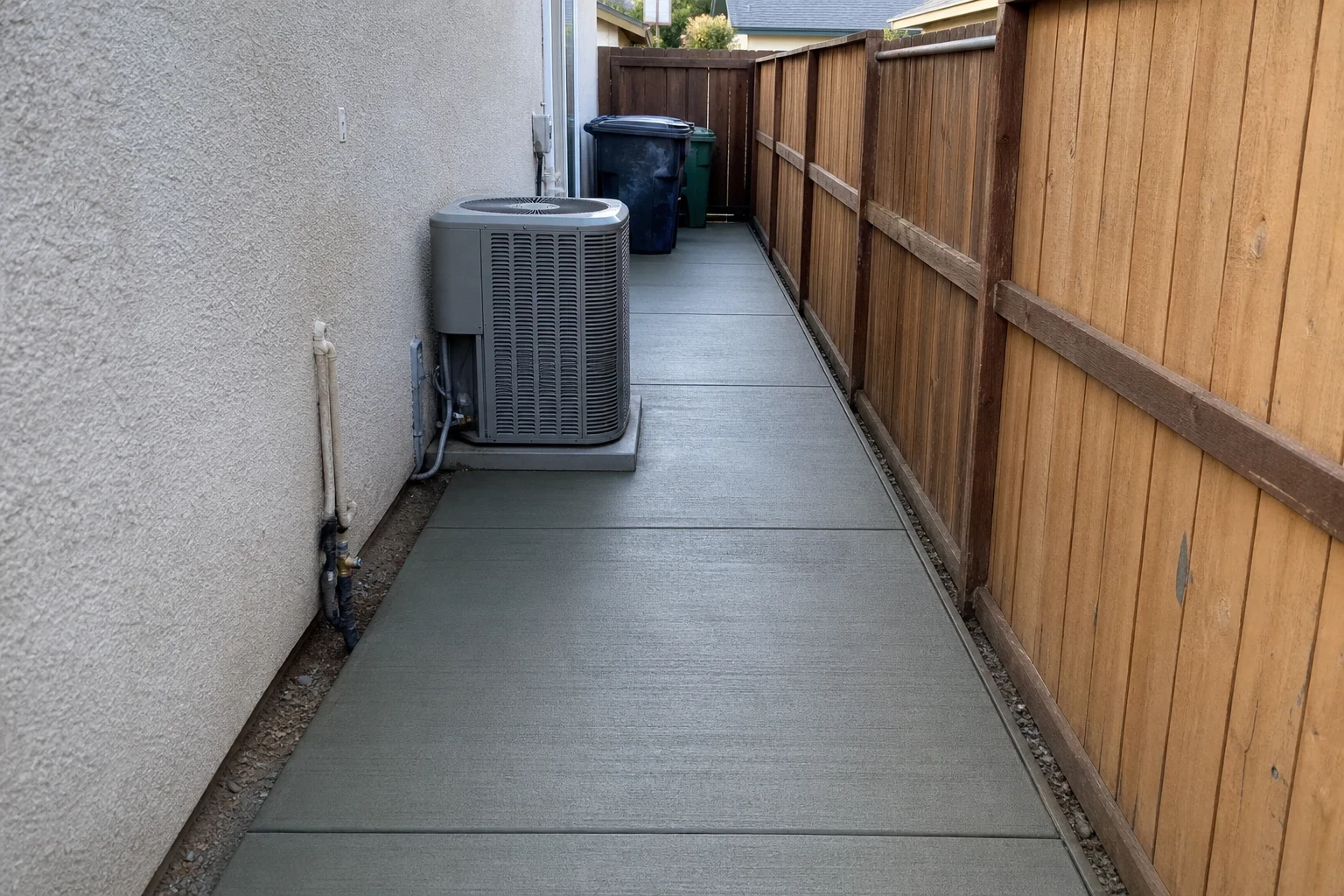
Concrete Side Yards in Brea
We turn the narrow strip beside your home into a clean concrete path that drains away from the house, stays clear of the stucco and gives you solid footing to the backyard. You get a level spot for bins and equipment and no more mud after winter rain.
A side yard that works as hard as the rest of your home
Most side yards are an afterthought. Dirt, a few loose stepping stones, maybe gravel that has worked its way into the lawn. It is also the path you use every week to roll out the trash, reach the hose bib or check the pool equipment. A concrete side yard gives that strip a job: a firm walking surface, a set slope that carries water toward the street or a drain, and a clean edge along the house.
Side yards are tight, often four to eight feet wide, with a fence on one side and your wall on the other. That shapes how we form, pour and finish. Concrete usually travels by wheelbarrow or a small line pump, and we plan around the gas meter, the AC pad and any downspouts before anything gets dug.
If something damaged the old side yard, such as a broken water line or a fallen tree, we photograph what we find and explain what we see in plain terms. We do not act as your adjuster or tell you what a policy will pay, but clear photos and a written scope make that conversation with your insurer easier.
What your side yard project includes
Removal and haul-off
We break out old concrete, pavers or stepping stones, dig out loose soil and roots, and haul the debris away. You are not left with a pile by the curb.
Grading for drainage
We set the slope so water runs away from your foundation and toward the street, a yard drain or the backyard. In clay soil that holds water, this step matters more than the finish.
Clearance at the stucco
Stucco walls have a metal weep screed near the bottom that lets moisture escape. We keep the new surface below it so the wall can still breathe and water does not wick up behind the plaster.
Base, forms and reinforcement
A compacted base goes down first, then forms and rebar or wire set at the right height. Control joints are placed so any shrinkage cracks follow a straight line instead of wandering.
Working around utilities
We mark utility lines before digging and form neatly around meters, cleanouts, hose bibs and AC pads. Access points stay reachable once the concrete cures.
Finish and cleanup
Most side yards get a broom finish for grip on wet days. A smooth trowel edge or a simple border is available, and we rinse down the fence and walls before we leave.
Signs your side yard is ready for concrete
- Water pools against the house
- If puddles sit along the wall after a storm, the ground is sloped the wrong way. That water can find its way toward your foundation or under the stucco.
- Mud tracks into the house
- Bare dirt turns slick and sticky every rainy season. Pets and kids carry it straight inside.
- Stepping stones have sunk or tipped
- Pavers and stones settle unevenly over time and become a tripping hazard, especially in the dark or while rolling a heavy bin.
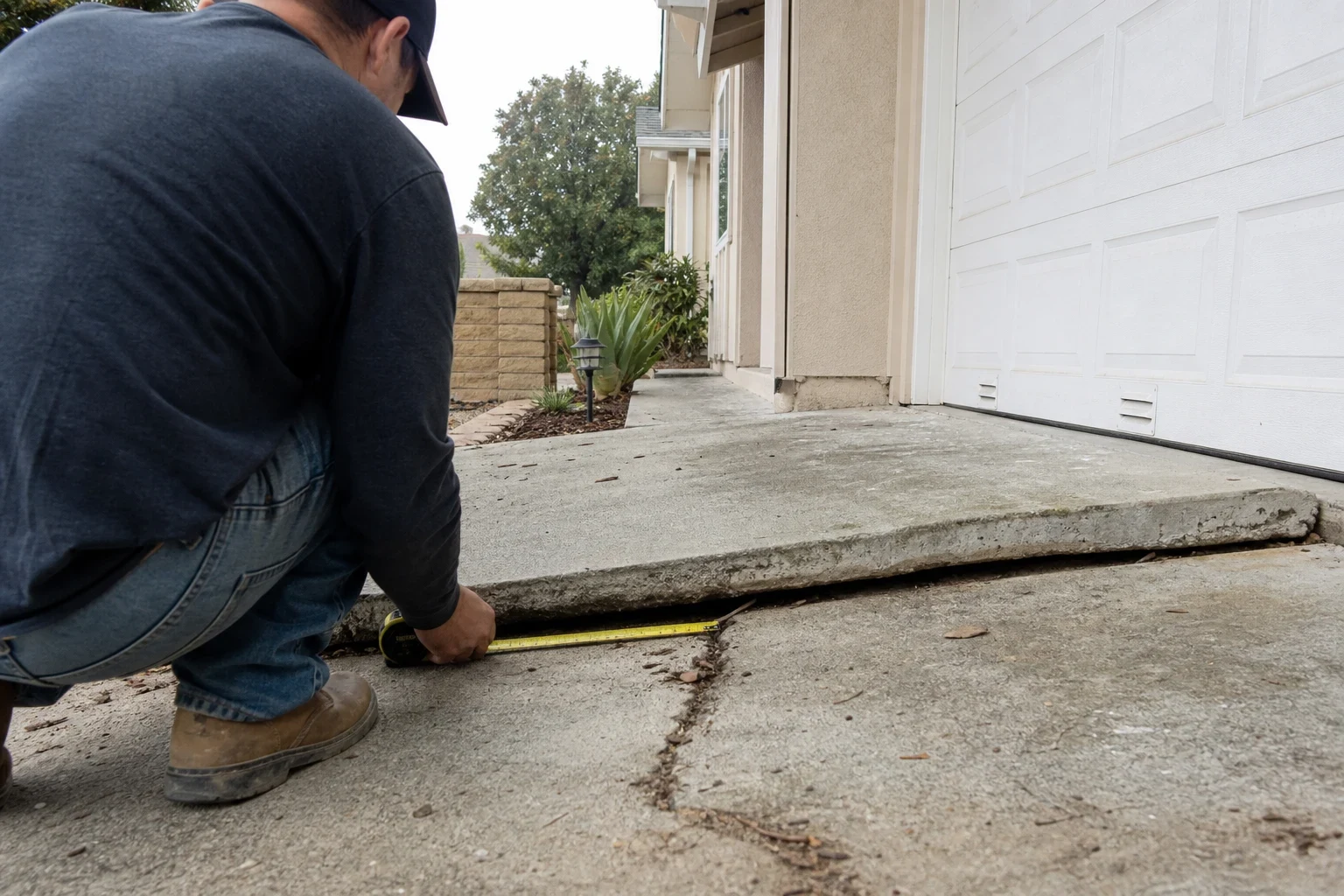
- Old concrete is broken up
- When a side yard slab is heaved by roots or split into loose pieces, replacing it with a new pour is usually the cleaner answer. We will tell you honestly what we see.
- Weeds come back no matter what
- Gravel and bare soil invite weeds in every crack. A poured surface closes that gap for good.
How a side yard job runs
- 1
Walk the space with you
We measure the width and length, check the slope, find the low spots and note anything in the way. You will hear what we recommend and why.
- 2
Written scope and price
You get a written estimate that spells out removal, base, thickness, finish and any drains. If insurance is involved, we include photos of the existing damage.
- 3
Prep and forming day
We dig out, compact the base, set forms and reinforcement, and confirm the fall away from the house before pouring.
- 4
Pour and finish
Concrete goes in by wheelbarrow or pump, then gets screeded, edged, jointed and broom finished. On hot days we pour early so the surface does not set too fast.
- 5
Cure and walk-through
Foot traffic is usually fine after a day or two. Keep heavy bins and equipment off for about a week, and we walk the finished side yard with you before calling it done.
What affects the cost of a concrete side yard
Side yards are smaller than most pours, but tight access and drainage work can move the number more than size alone. We price every item on paper so you can see where the money goes. Here is what usually makes the difference.
- Length, width and thickness
- Square footage sets the material and labor. A path that will carry a mower or a heavy cart may call for a slightly thicker slab.
- Access to the space
- A side yard behind a gate with a narrow opening means more wheelbarrow trips or a pump. Easy street access keeps labor down.
- What has to come out first
- Removing old concrete, pavers or tree roots adds demolition and haul-off time. Bare dirt is the simplest starting point.
- Drainage needs
- Adding a channel drain, area drains or a tie-in to downspouts adds materials and labor, but it is often the most valuable part of the job.
- Finish choice
- A standard broom finish costs the least. Decorative borders or a stamped section to match a patio add time.
Side yard questions we hear often
- How wide should a concrete side yard be?
- Most run the full width between the house and the fence, so you do not end up with a strip of dirt to maintain. If you want a planting bed along the fence, we can leave one and pour a path of three to four feet. We will look at how you use the space and suggest what makes sense.
- Will the concrete cause water problems against my house?
- Not when it is graded correctly. We slope the surface away from the wall and keep it below the stucco weep screed so moisture can escape. Where water has nowhere to go, we talk with you about adding a drain.
- Can you pour around my AC unit and gas meter?
- Yes. We form around equipment pads, meters, cleanouts and hose bibs so they stay accessible. If the AC pad is cracked or sitting low, we can pour a new pad as part of the job.
- Does homeowners insurance pay for a new side yard?
- It depends on what caused the damage and your policy, and that decision belongs to your insurer. Sudden events like a burst pipe are handled differently than wear over time. We can document the damage with photos and a written scope so you have clear information to share with your adjuster.
- How long until I can use it?
- You can usually walk on it within a day or two. Wait about a week before rolling full trash bins or heavy equipment across it, and give it longer before anything with an engine.
- Can you match my driveway or patio?
- Often, yes. We can carry a similar finish or border from your driveways and patios down the side of the house so the property looks connected. Exact color matches to older concrete are hard to promise, and we will be upfront about that.
Ready to clean up the side of your home?
Tell us about the space, what bothers you about it now and how you use it. We will walk it with you and put the plan and price in writing.