ServicesConcrete Slabs
Concrete Slabs in Brea
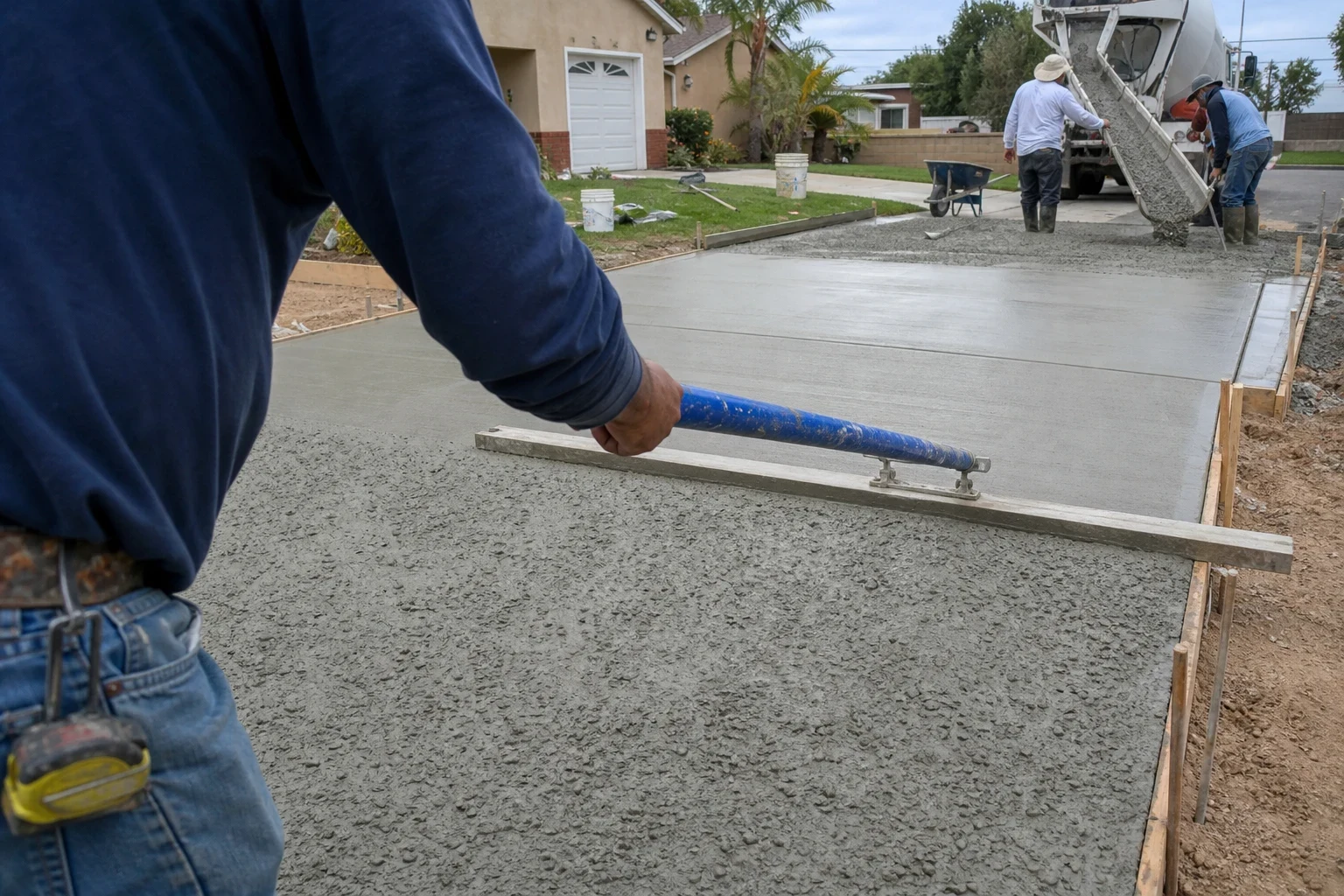
We pour new concrete slabs for sheds, hot tubs, equipment pads and open yard space. Every slab starts with a compacted base, the right thickness for what sits on it, and a written estimate you can read line by line before any work begins.
A slab is only as good as what's under it
Most slab problems start below the surface. Soft fill, poor drainage or a base that was never compacted lets concrete settle, tilt and crack within a few seasons. We spend real time on the ground before we ever order concrete, because that's the part you can't fix later without tearing it all out.
A slab is the right call when you need a flat, solid surface for something specific: a storage shed, a spa, a pad for pool equipment or an AC condenser, a workshop floor, or simply a clean square of yard that doesn't turn to mud. If the area connects to a patio or walkway, we can plan it alongside those so the grades and finishes match.
If your old slab was damaged by something sudden, like a fallen tree or a broken water line, we'll photograph what we find and write up the replacement clearly so you have something solid to share with your insurance company. The adjuster makes the coverage decision; we just make sure the facts are easy to follow.
What your slab project includes
- 01
Site check and measurements
We look at slope, drainage, access and what the slab needs to carry. Then we measure and mark the layout with you so there are no surprises about size or placement.
- 02
Removal of old concrete
If a worn or broken slab is in the way, we break it out, haul it off and clear the area down to workable ground.
- 03
Compacted base
We grade the soil and lay and compact a gravel base so the slab has even support. Clay soils that swell when wet and shrink when dry get extra attention here.
- 04
Forms, reinforcement and pitch
Forms are set with a slight slope so water runs off instead of pooling. Rebar or wire mesh goes in based on the load, heavier for a hot tub than for a garden shed.
- 05
Pour, finish and control joints
We place and finish the concrete, then cut control joints so any shrinkage cracking happens in straight, planned lines. A broom finish is standard outdoors for grip.
- 06
Cleanup and curing guidance
We clean up the work area and tell you plainly when it's safe to walk on, set furniture on, or place heavy equipment.
Questions about Concrete Slabs?
Call(714) 364-4450Signs it's time for a new slab
Sections have sunk or tilted
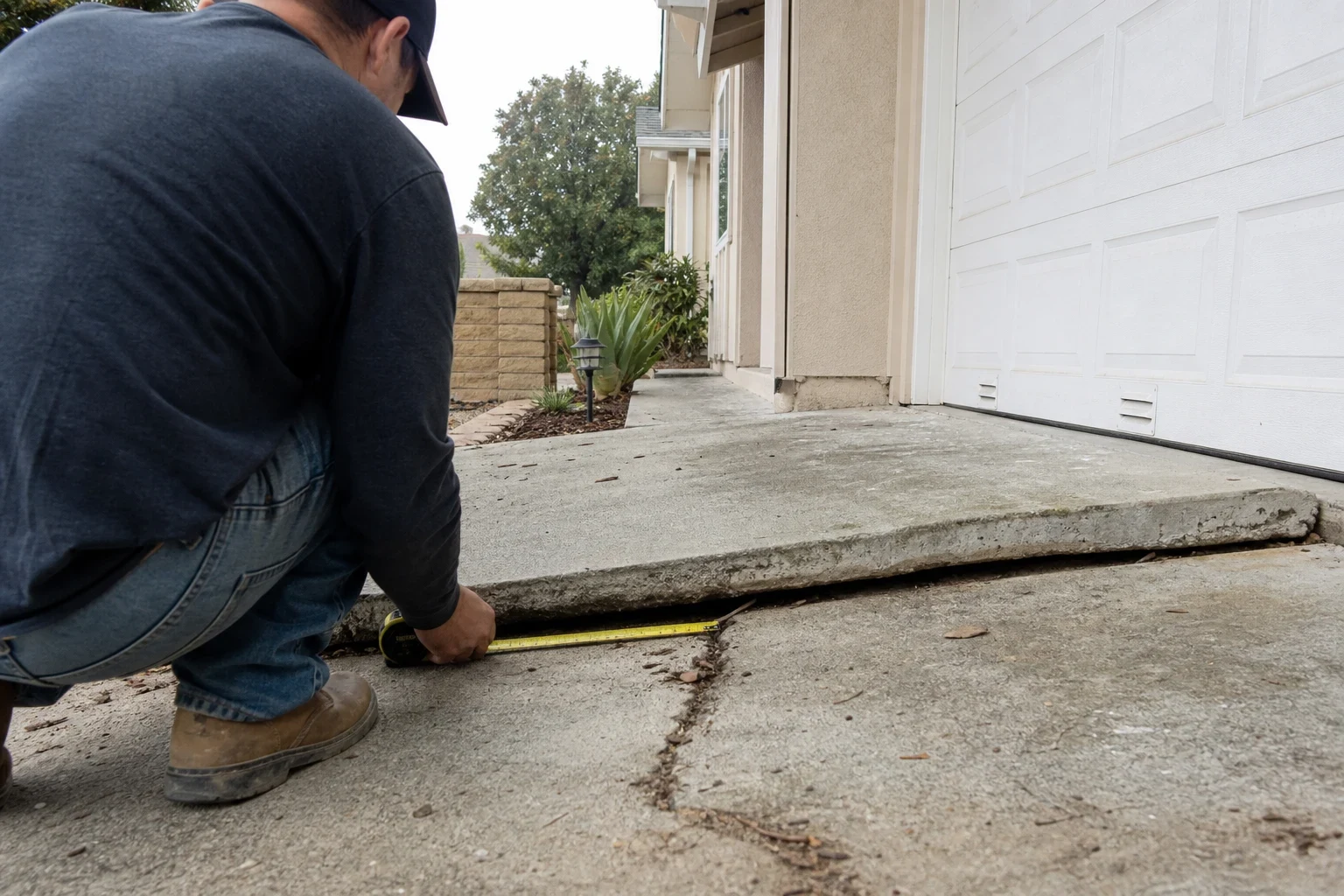
When one part of a slab drops below the rest, the base underneath has usually washed out or settled. Patching the top won't change what's going on below.
Water pools against your home
A slab that slopes toward the house sends rainwater toward your foundation. Replacing it with proper pitch moves water away where it belongs.
Tree roots have lifted it
Roots can push a slab up and split it apart. A new pour lets us deal with the root zone and rebuild the base.
You're adding a shed, spa or equipment
Pavers and dirt pads shift under steady weight. A reinforced slab gives heavy items a level home that stays put.
Wide cracks keep spreading
Hairline cracks are normal. Cracks you can fit a coin into, or ones with uneven edges, usually mean the slab has lost its support.
How a slab job runs
- 1
Phone conversation
You tell us what the slab is for and roughly where it goes. We'll ask a few questions and set a time to come look.
- 2
Visit and written estimate
We measure, check the soil and drainage, and take photos. You get a line-item estimate covering demolition, base, concrete, reinforcement and finish, so you can see where every part of the price comes from.
- 3
Prep day
We remove any old concrete, grade the area, compact the base and set forms and reinforcement. If a permit or inspection is required for your project, we'll tell you up front and plan around it.
- 4
Pour day
The concrete is placed, leveled and finished in one go, and joints are cut. Most slabs are ready for foot traffic in a day or two and heavier loads after about a week.
What moves the price of a slab
We won't quote a number before we see the site, because two slabs of the same size can cost quite differently. Here's what actually makes the difference, and your written estimate will show each one.
- Size and thickness
- Square footage sets the amount of concrete. A slab for a hot tub or vehicle needs more thickness and reinforcement than one for patio chairs.
- Removal and haul-off
- Breaking out an existing slab adds labor and disposal. Thick or heavily reinforced old concrete takes longer.
- Ground and drainage
- Sloped yards, soft fill or expansive soil may need extra excavation, more base material or added drainage.
- Access
- If a truck can reach the forms, the pour is straightforward. Narrow side yards or backyards behind the house may need a pump or wheelbarrows.
- Finish choices
- A standard broom finish is the simplest. Color, stamped concrete patterns or decorative borders add time and material.
Questions about concrete slabs
How thick should my slab be?
Most yard and shed slabs are about four inches thick. Hot tubs, workshop equipment and anything with wheels usually call for more, plus heavier reinforcement. We'll recommend a thickness based on what will actually sit on it.
Will my new slab crack?
Concrete shrinks as it cures, so some fine cracking is normal. Control joints guide those cracks into straight lines, and a well-compacted base keeps the slab from settling and splitting the way unsupported concrete does.
Can insurance help pay for a damaged slab?
Sometimes, depending on what caused the damage and your policy. Sudden events like a fallen tree are treated differently from gradual wear. We can photograph the damage and give you a detailed estimate to share with your insurer, but your adjuster decides what's covered.
Can you pour a slab next to my existing patio?
Yes. We match the height and slope so water drains properly and the two surfaces meet cleanly. Exact color matching with older concrete is hard, so we'll talk through how close we can get.
Do I need to be home on pour day?
It helps to be around at the start so we can confirm the layout, but you don't need to stay all day. We'll make sure gates and access are sorted out beforehand.
Ready for a slab that stays level?
Tell us what it's for and where it goes, and we'll set up a visit to look at the ground and walk you through the options. We work in Brea and nearby towns like Fullerton and Yorba Linda.