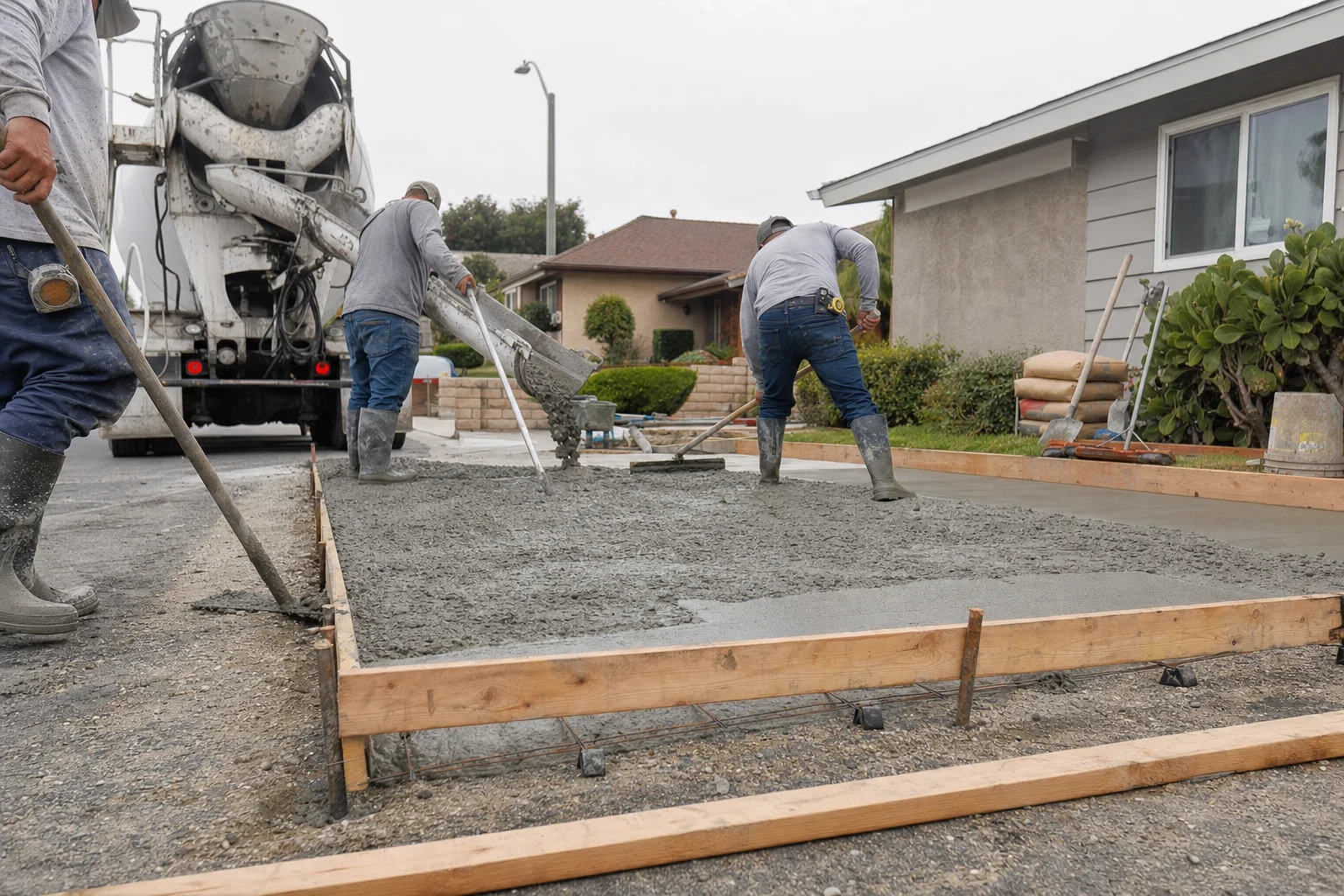
Brea, CA
Concrete Driveways, Patios and Outdoor Spaces in Brea
We pour new driveways, patios, stamped concrete, pool decks, slabs and walkways for homeowners in Brea and nearby towns like Fullerton and Yorba Linda. If damaged concrete is headed for an insurance claim, we document what we find and explain the process plainly, without promising what your insurer will decide.
- Written line-item estimates
- Photos of what we find
- Permits pulled when required
- Daily cleanup on site
Where We Pour Concrete
We are based in Brea and work across the surrounding area, including Fullerton, Yorba Linda, La Habra, Placentia and Anaheim. We also take projects in Orange, Diamond Bar, Rowland Heights, La Habra Heights and West Covina. The Service Areas page lists the towns we cover in more detail.
- Brea
- Fullerton
- Yorba Linda
- La Habra
- Placentia
- Diamond Bar
- Rowland Heights
- La Habra Heights
- Anaheim
- Orange
- West Covina
If your town is not listed, give us a call and describe the project. We will tell you honestly whether we can take it on.
Concrete Work for Every Part of Your Home
Most of our work is new concrete: tearing out what is cracked, heaved or worn and pouring a fresh, properly prepared slab in its place. That covers driveways, patios, stamped concrete, concrete pool decks, full concrete backyards and courtyards, side yards, RV parking pads, garage floors, steps and stairs, and walkways and sidewalks. Each service page explains how that job runs and what affects its price, so you can read about your project before we ever talk.
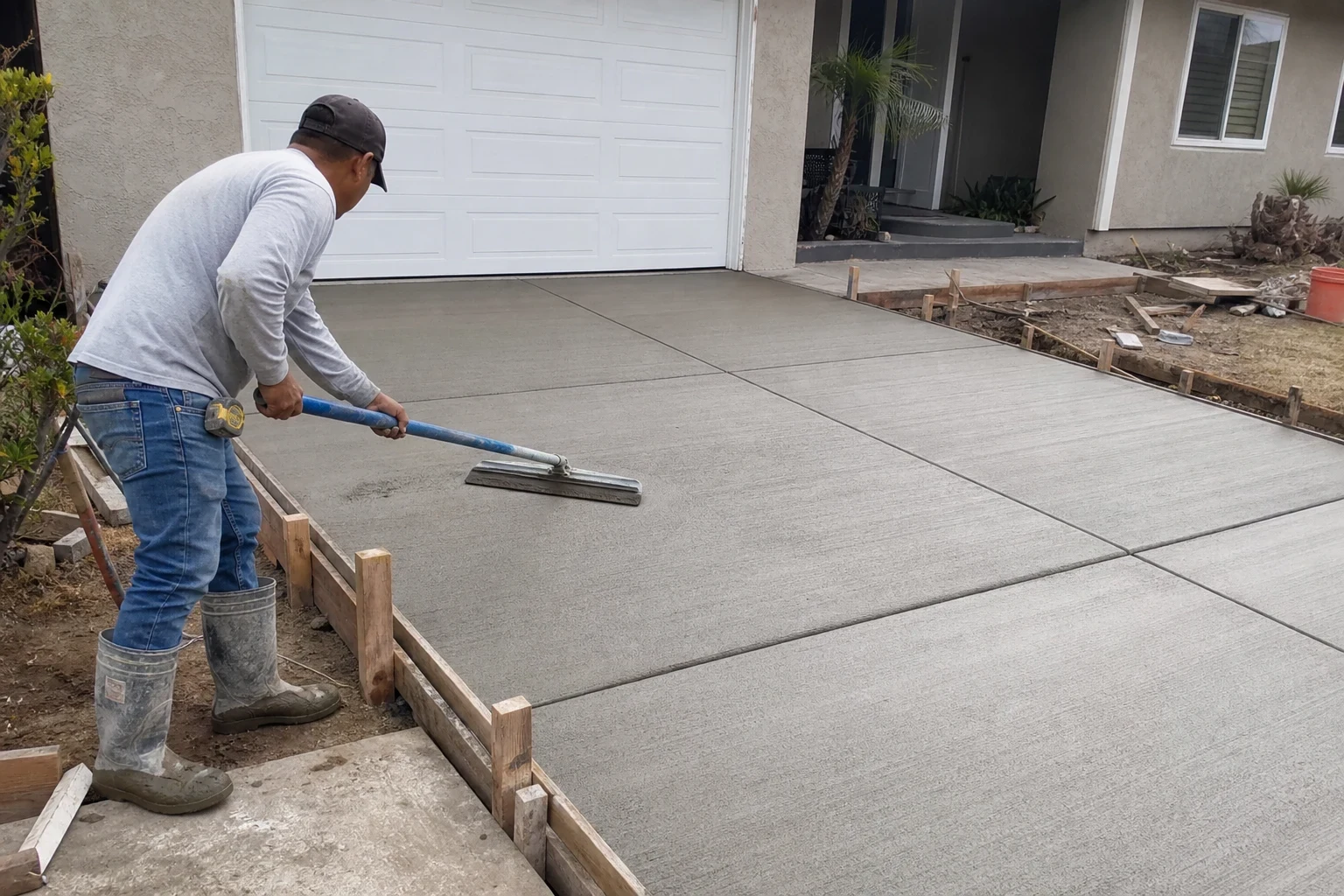
Driveways
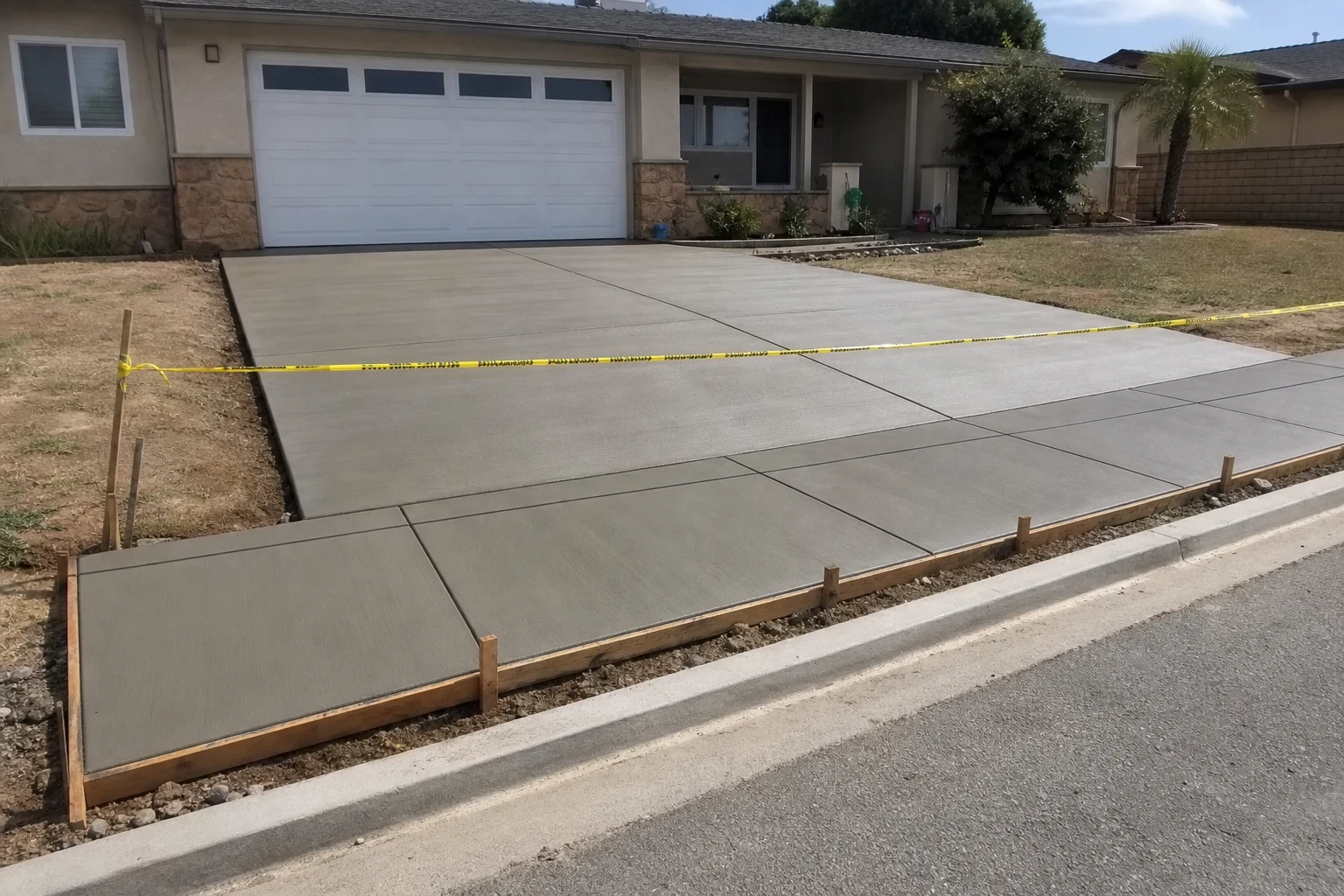
Tear-out and new concrete driveways with proper base prep, steel reinforcement, control joints and a written estimate you can follow line by line.
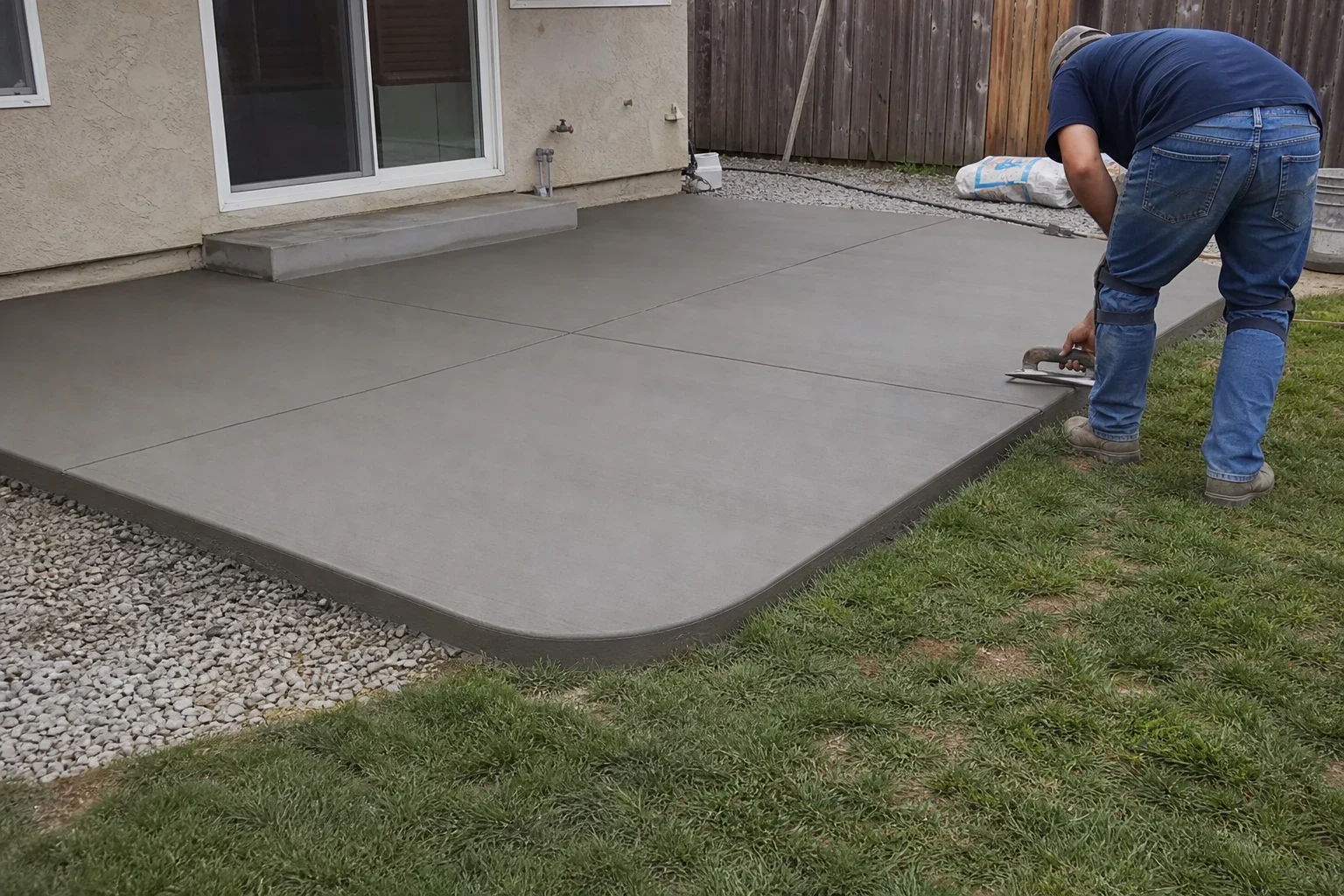
Patios
A new concrete patio sloped away from your home, set on a compacted base, with photos and a line-item estimate if insurance is part of the picture.
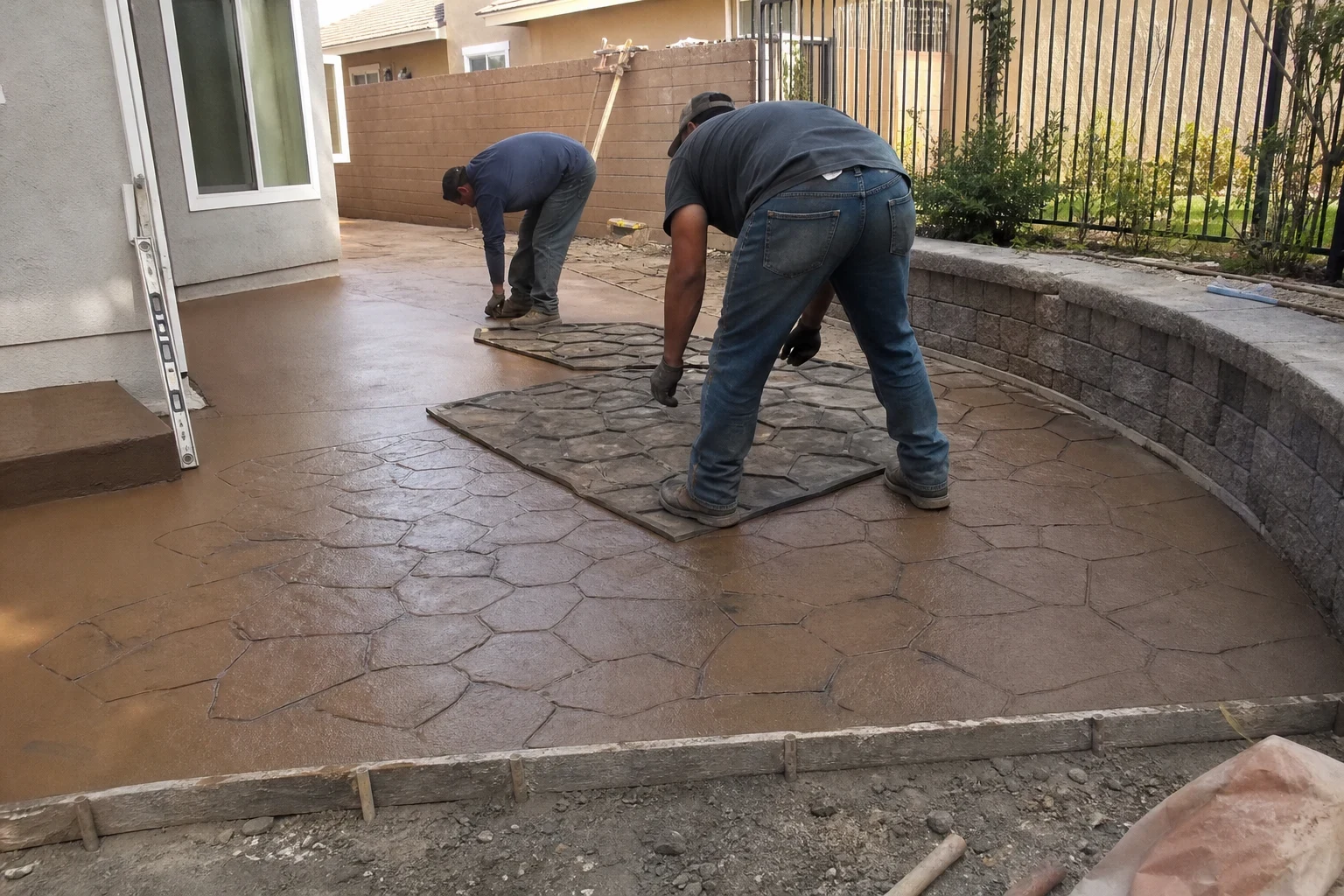
Stamped Concrete
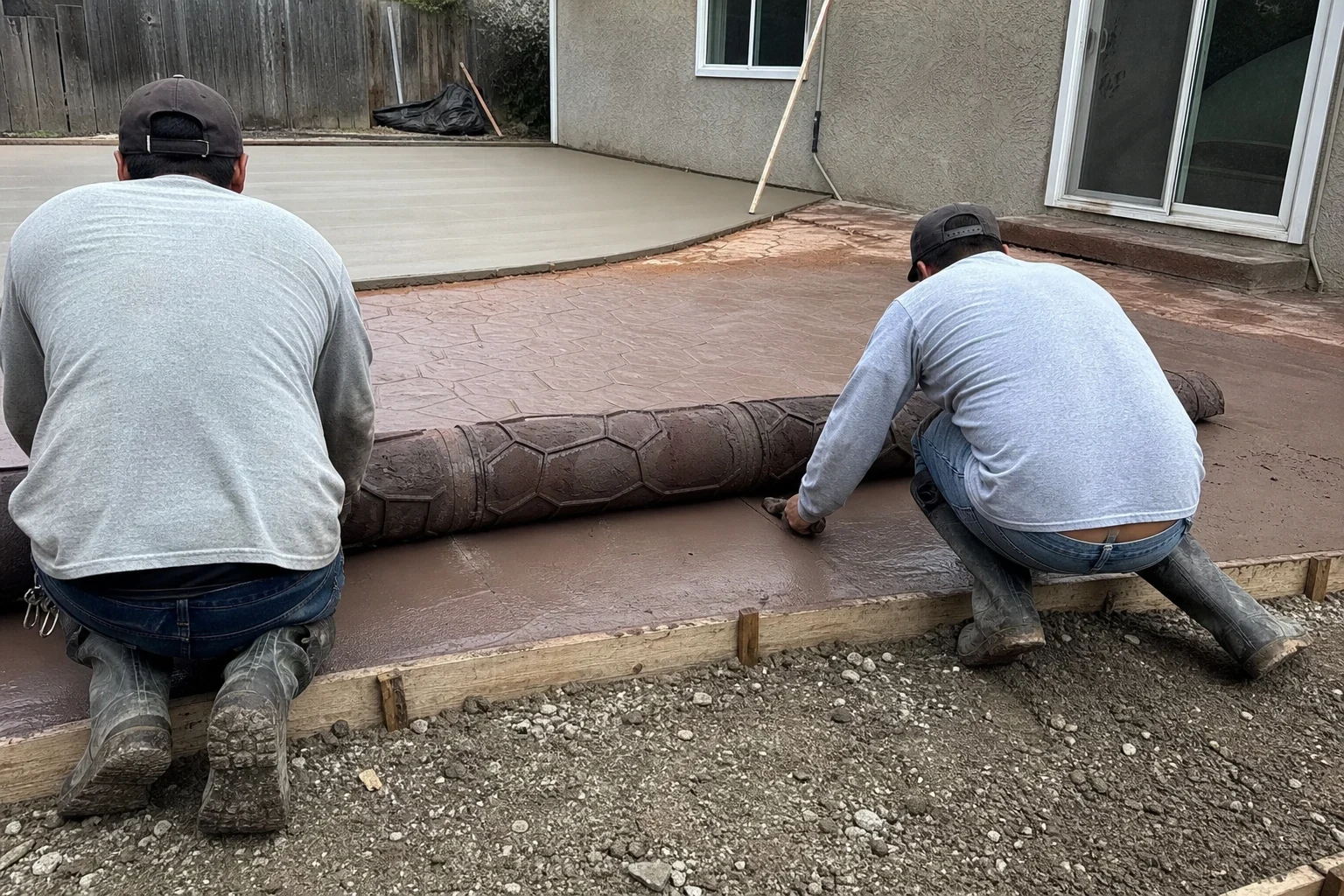
New stamped concrete with the look of slate, flagstone or wood plank, poured on a solid base and sealed to hold its color.
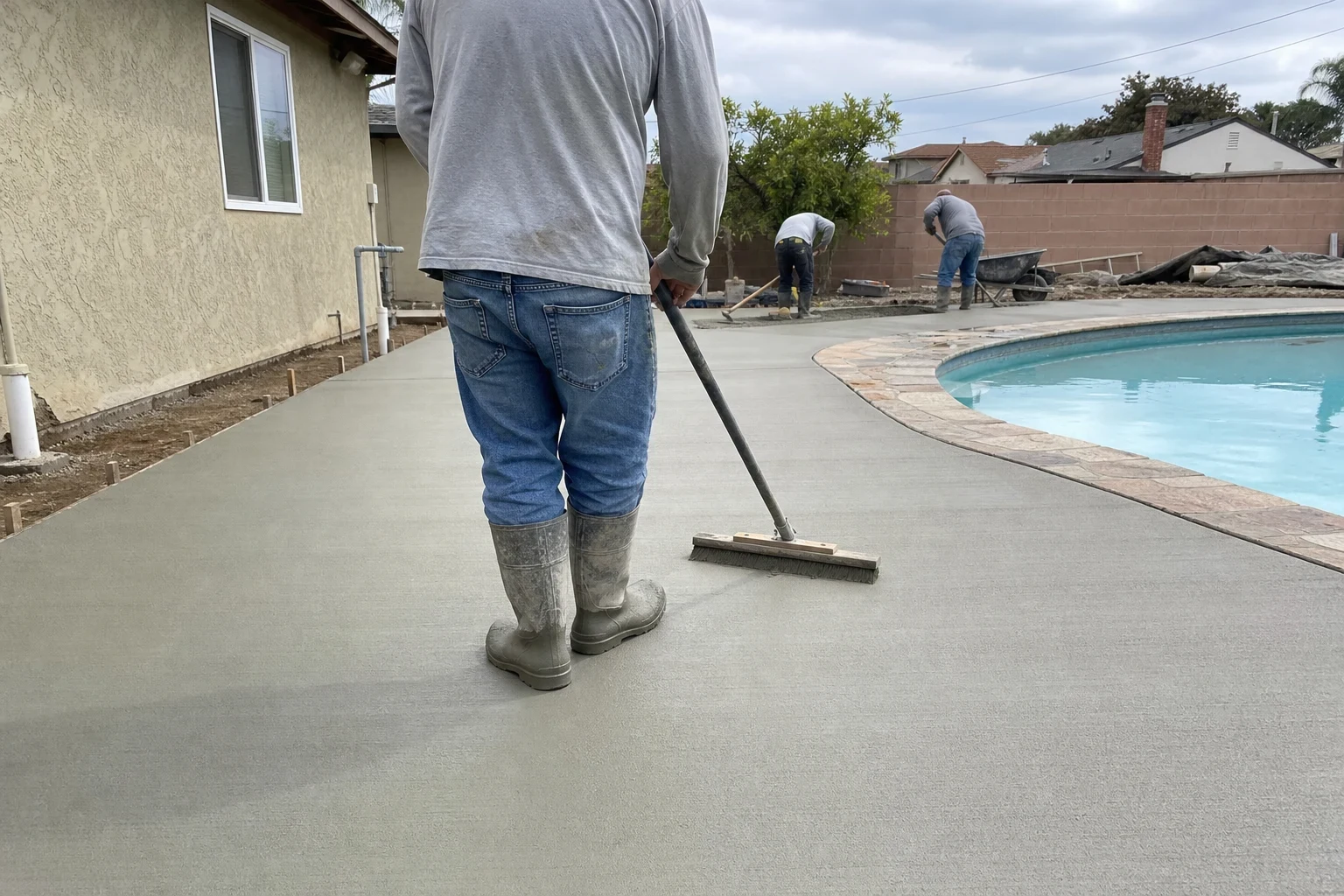
Concrete Pool Decks
Pool deck replacement and new installs with a slip-resistant, cooler finish, correct drainage and flexible joints at the coping.
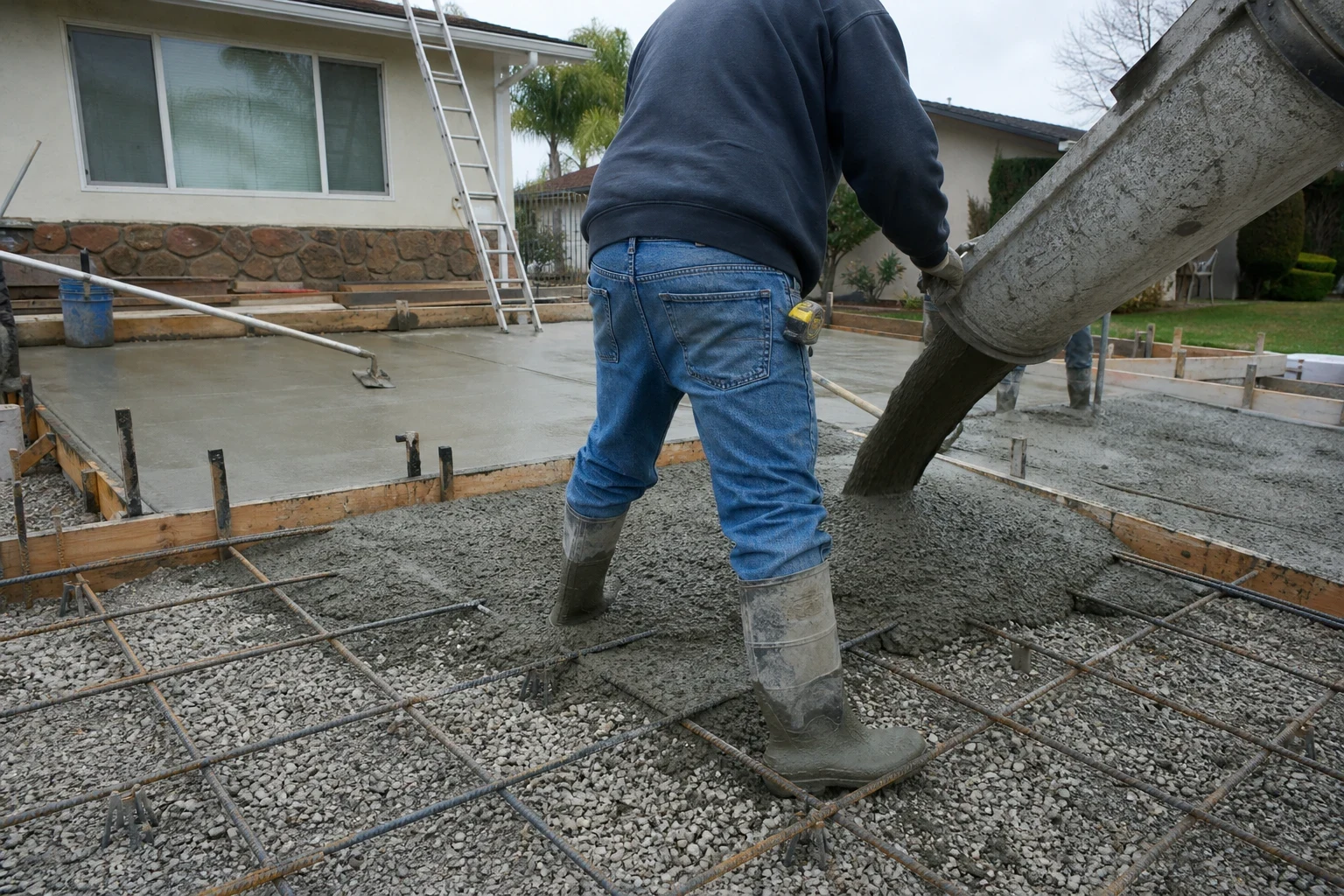
Concrete Backyards
Full backyard concrete planned around drainage, shade and how you use the space, plus clear documentation when an insurance claim is part of the job.
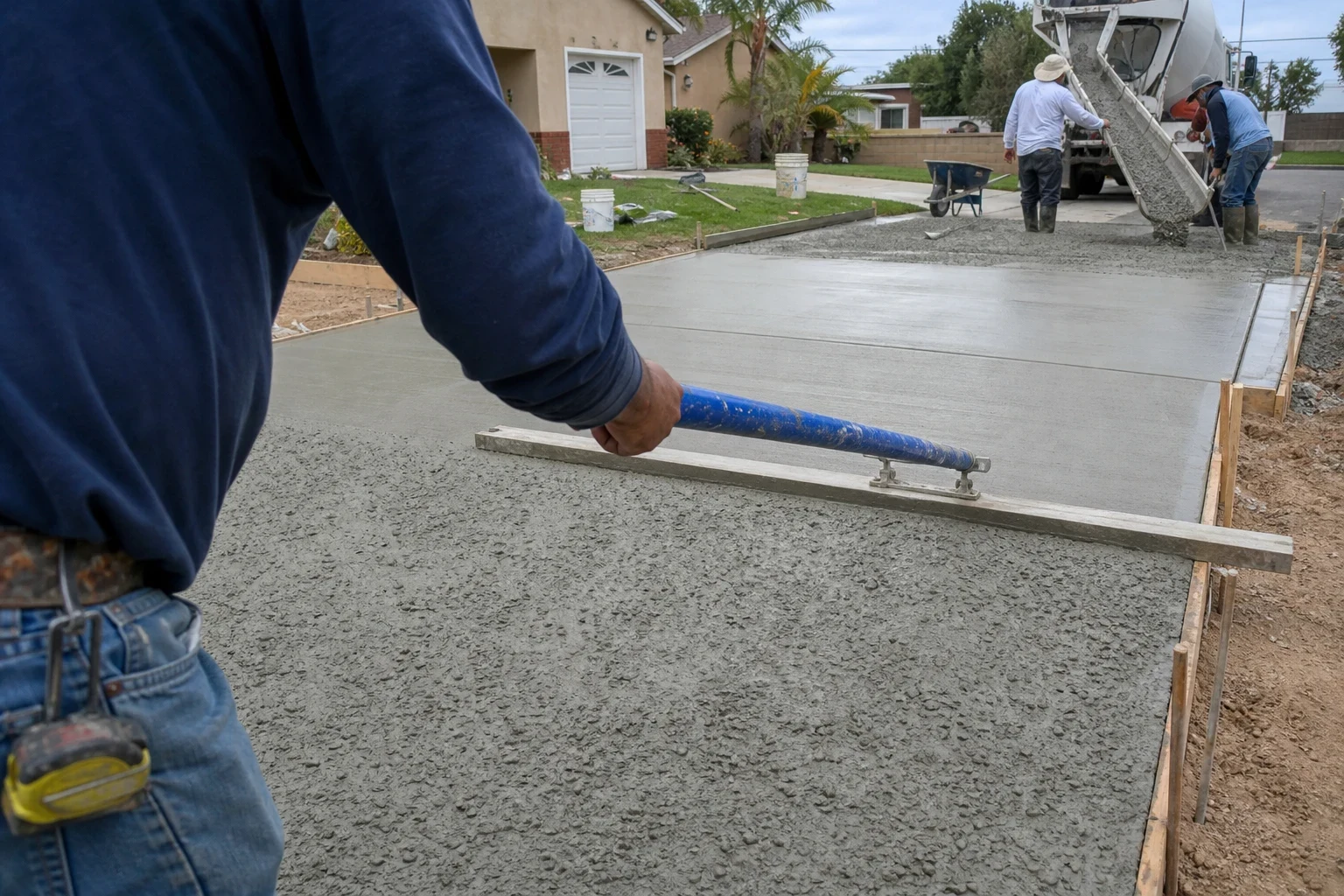
Concrete Slabs
Flat, well-drained concrete slabs for sheds, spas, AC units and open yard space, poured over compacted base with reinforcement sized to the load.
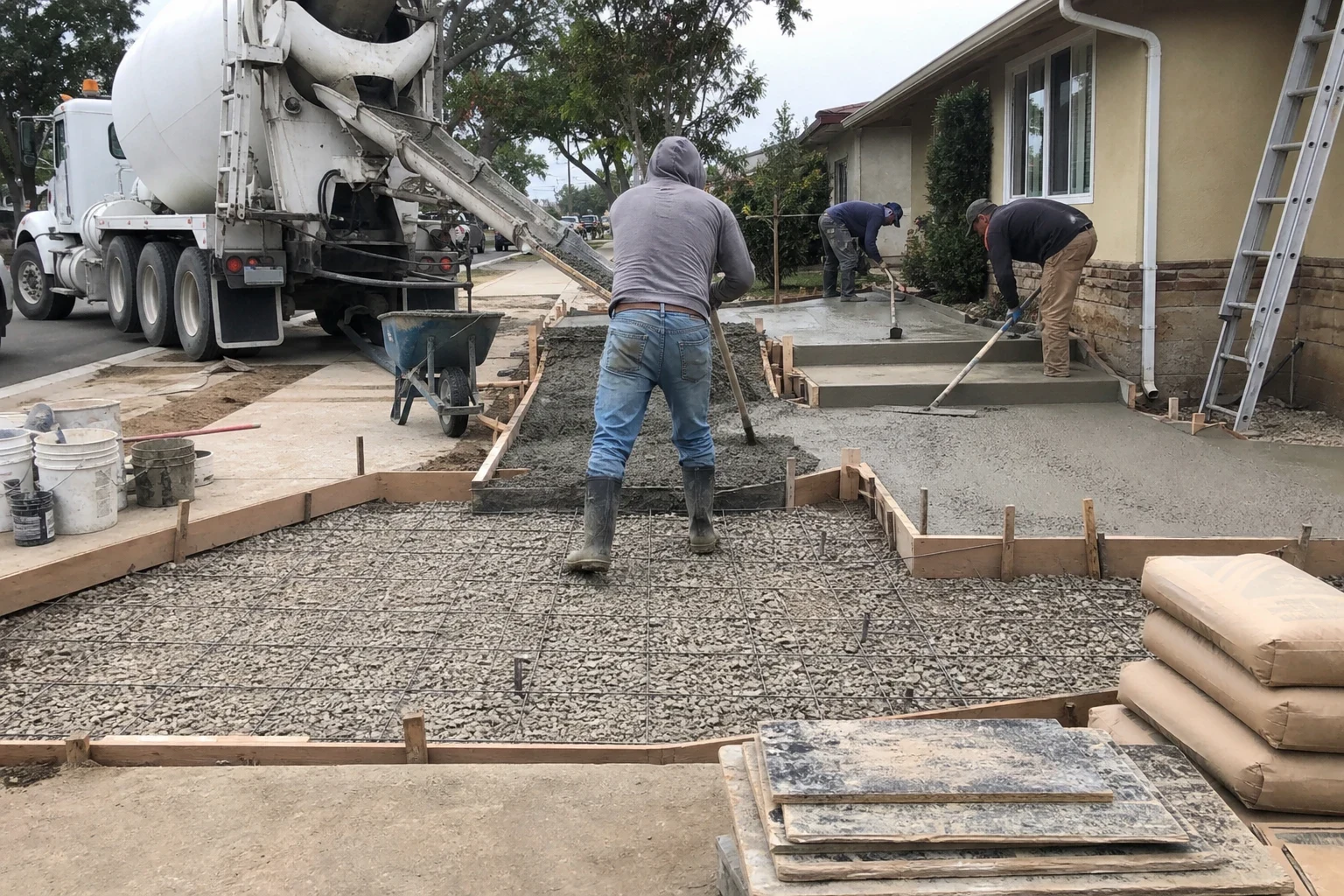
Concrete Steps and Stairs
Front entry steps, backyard stairs and slope stairs poured with even risers, proper footings and a non-slip finish, with plain help if an insurance claim is involved.
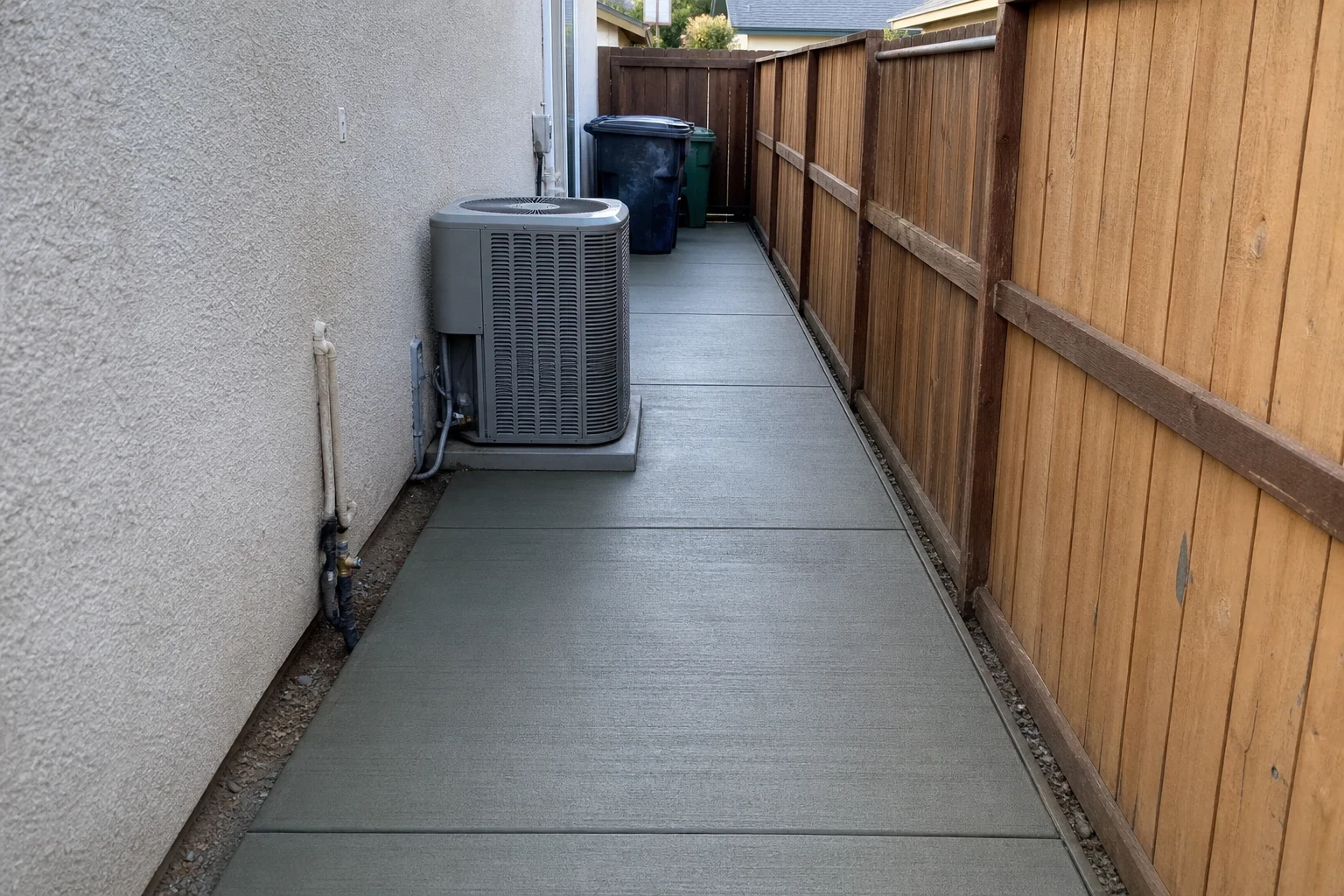
Side Yards
A sloped concrete path along the side of your home that sheds water, keeps mud out and gives your bins, meters and AC unit a firm, level place to sit.
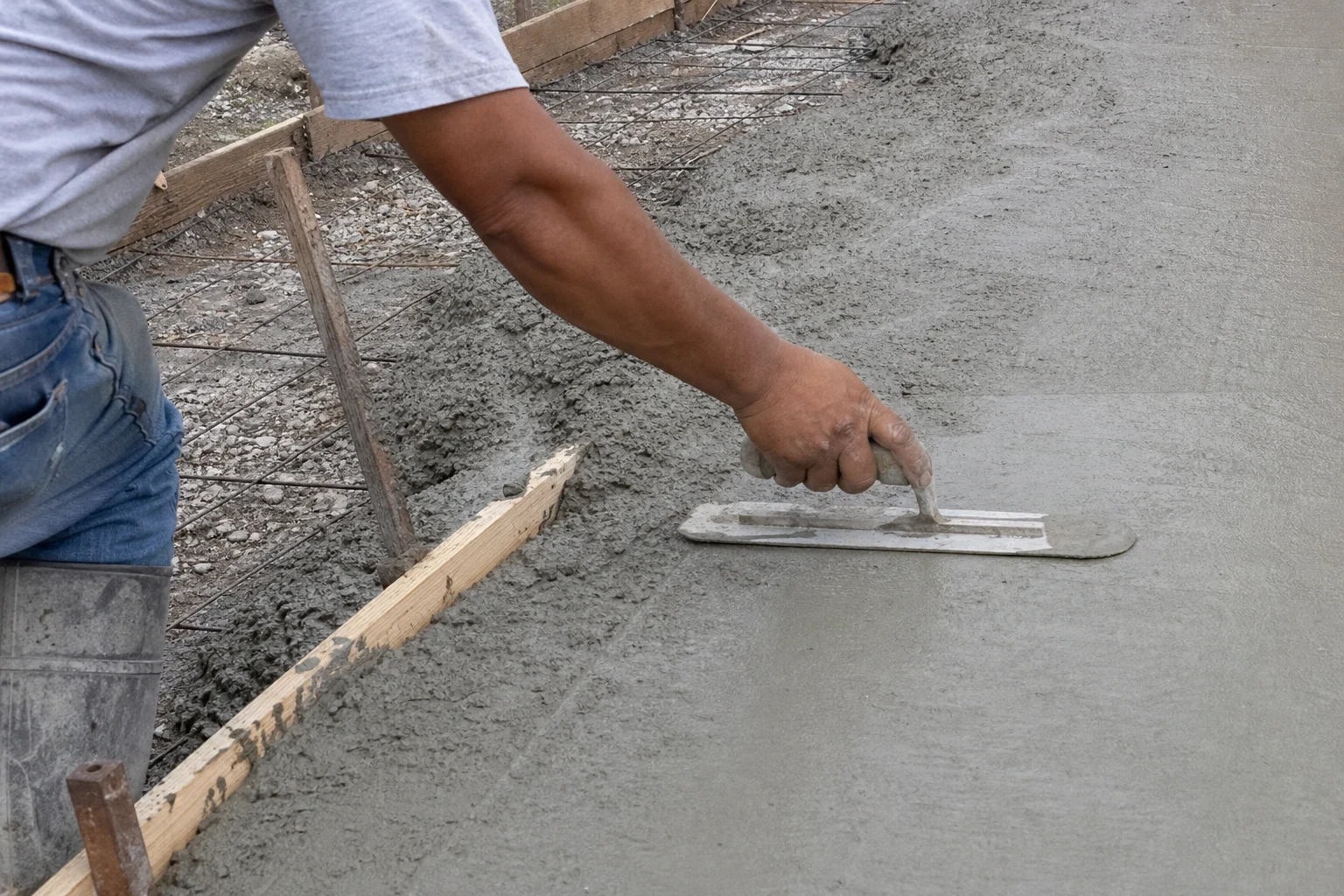
RV Parking Pads
A thick, reinforced concrete pad sized for your RV, sloped to drain and laid out so you can back in without fighting the gate or the curb.
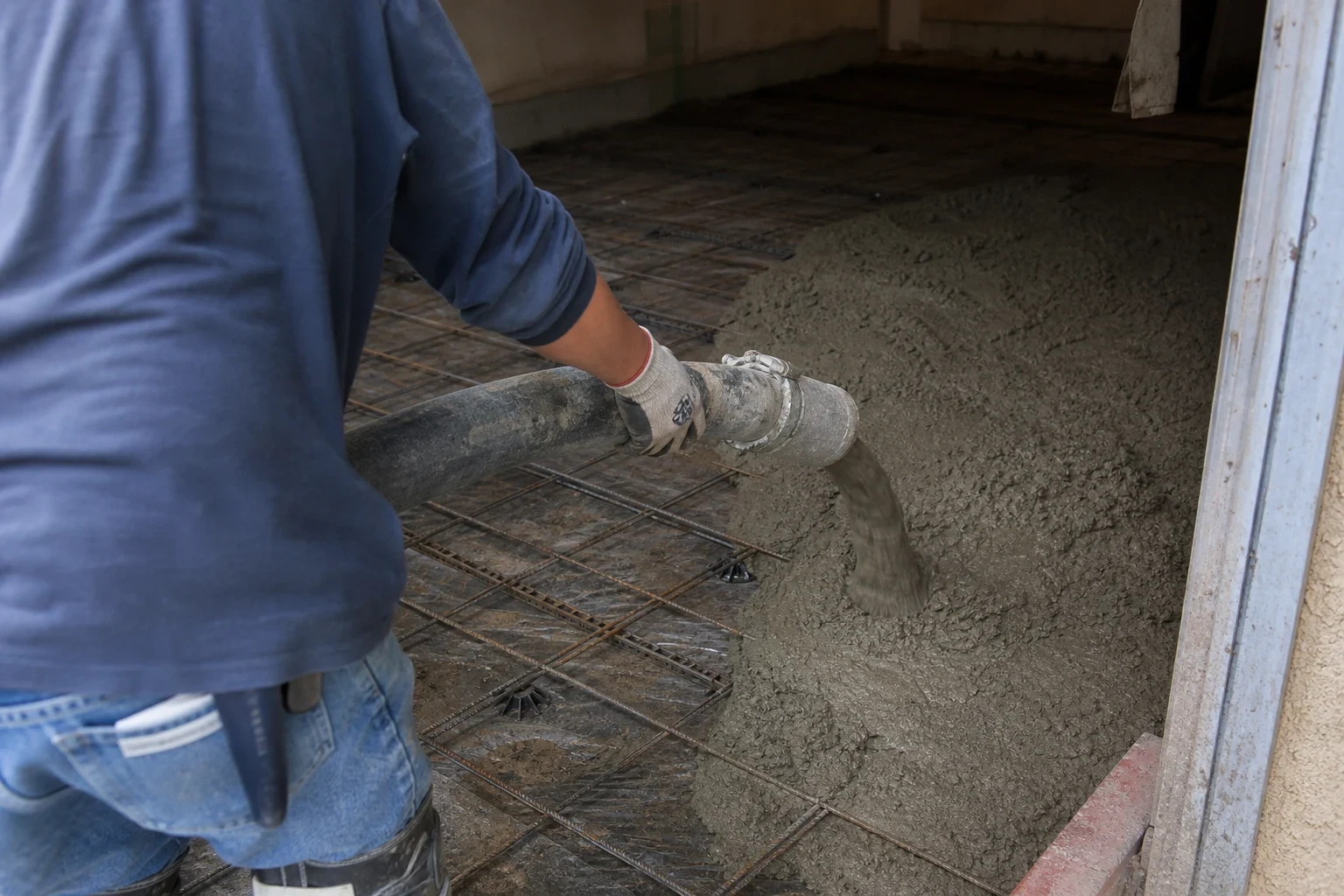
Concrete Garage Floors
Tear-out and new pours for cracked, sunken or stained garage slabs, with a firm base, slope toward the door and photos for any insurance claim.
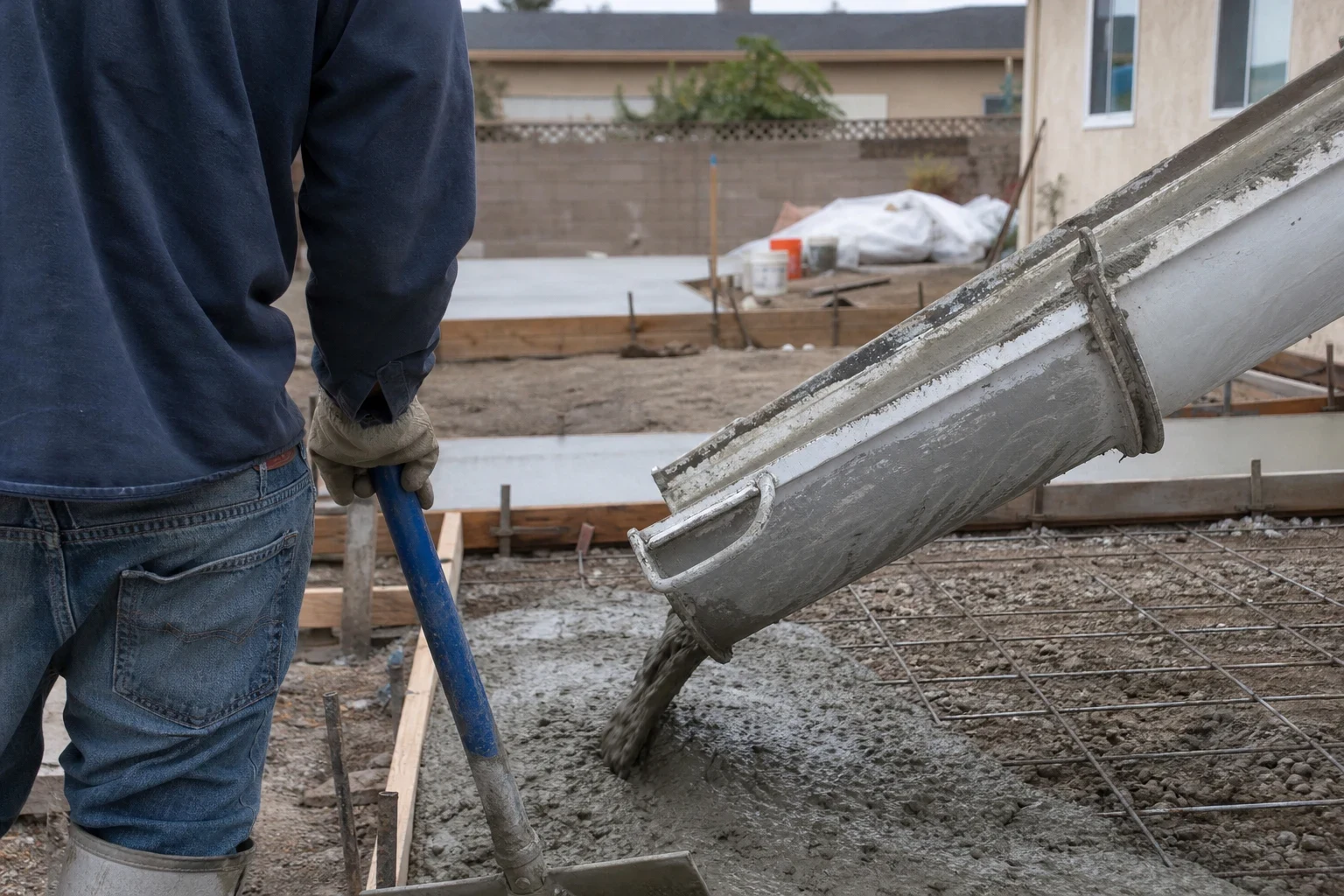
Concrete Courtyards
New concrete courtyards for enclosed and semi-enclosed spaces, built around planters and doors, and sloped so rainwater leaves instead of pooling.
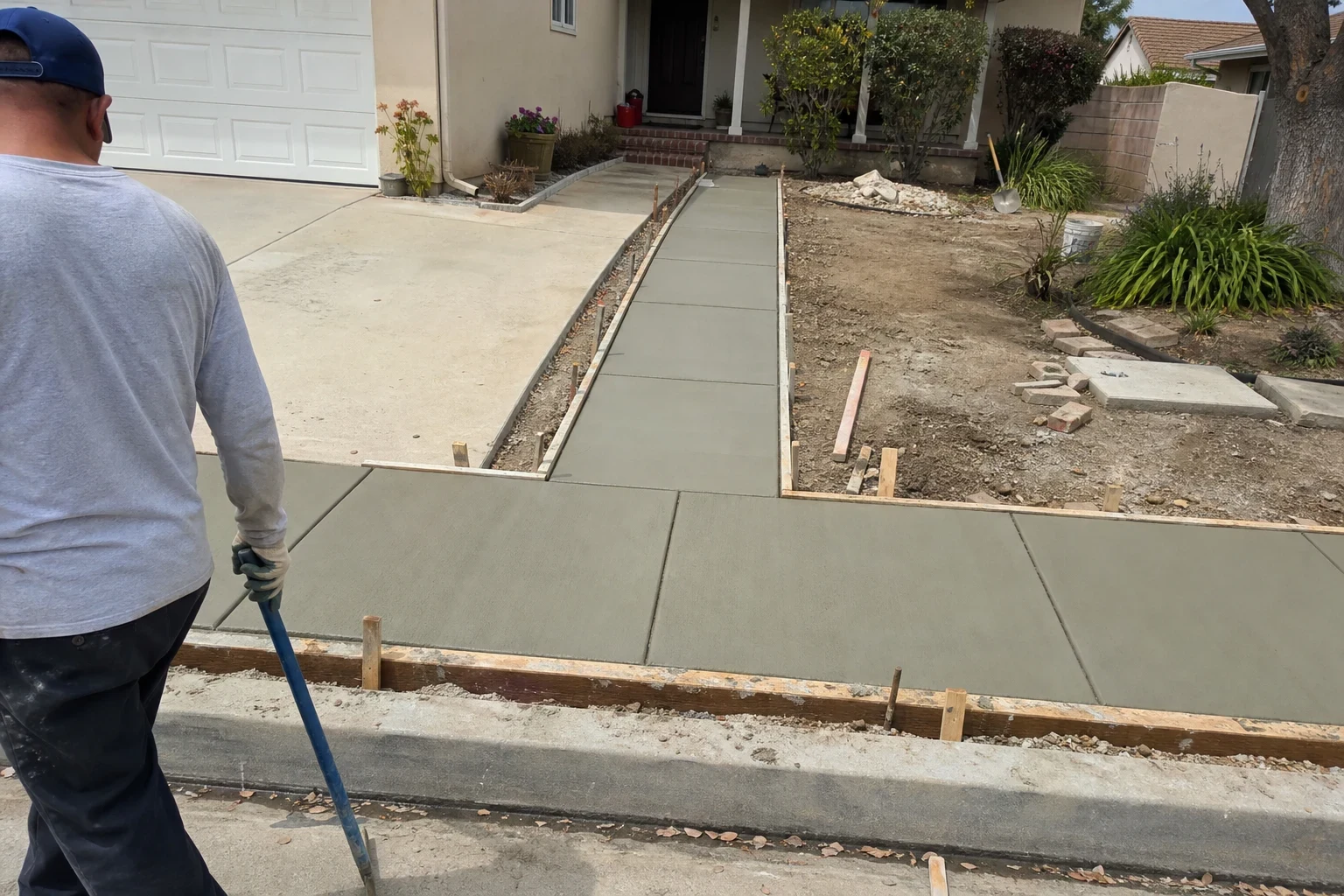
Walkways and Sidewalks
New concrete walkways and sidewalks with a compacted base, correct slope and well-placed joints, so the path to your door stays level and dry.
About Brea Concrete Contractor
We are a concrete company that works outside your home: front driveways, backyards, pool surrounds and the paths that connect them. Our focus is new work done on a properly prepared base, because that is what decides how a slab looks in ten years.
A lot of calls we get start with something that went wrong. A tree root lifted a walkway, a delivery truck cracked a driveway apron, or a leak washed out the ground under a patio. People want to know whether insurance might help and what to do first. We answer those questions honestly, take careful photos and measurements, and give you a written scope you can hand to your adjuster. The decision about coverage belongs to your insurance company, and we will always tell you that plainly.
When you call, you talk with someone who can describe the work, explain the costs and tell you what the next step is.
How a Concrete Job Runs
Most residential pours follow the same path. Here is what happens and when.
- 1
A conversation by phone
You tell us what you want built or what was damaged, and we ask a few questions about size, access and timing. If insurance is involved, mention it so we know to document before anything else.
- 2
Site visit and measurements
We measure, check drainage and slope, look at access for equipment and note any trees or utilities in the way. For damaged concrete, we take the photos and notes your insurer may want.
- 3
Written estimate and scheduling
You receive a line-item estimate and a clear scope. Once you approve it, we pull any needed permit and set a start date.
- 4
Demo, prep and forming
We remove old material, grade and compact the base, set forms and place reinforcement. If an inspection is required before the pour, it happens here.
- 5
Pour, finish and cure
We place and finish the concrete, cut control joints and leave clear instructions on when you can walk and drive on it. Then we clean up and walk the finished work with you.
What Shapes the Price of New Concrete
Every project is priced from measurements and a look at the site, not from a chart. A few things move the number more than anything else. Knowing them up front helps you decide where to spend and where to save.
We measure and look at the site, then go over a written line-item estimate with you by phone. If anything changes once the old concrete is out, we show you and talk it through before doing more.
- Square footage and thickness
- Bigger areas need more concrete and more labor. A driveway or RV pad that carries heavy vehicles is poured thicker than a garden walkway, which adds material.
- Removing what is there
- Breaking out old concrete, asphalt or pavers and hauling it away is real work. Thick slabs, heavy rebar or tight access make it take longer.
- Soil and base preparation
- The clay-heavy soils common around north Orange County swell when wet and shrink as they dry, so good compaction and a proper gravel base matter. Soft or root-damaged ground may need extra excavation before we can pour.
- Reinforcement and joints
- Rebar or wire mesh and well-placed control joints help concrete crack where you want it to, if at all. Larger or heavily loaded slabs need more of both.
- Surface look
- The most basic surface gets a light textured pass with a broom for grip, and it costs the least. Pressed patterns, color mixed right into the batch, exposed stone and a sealer coat each add their own labor and materials.
- Access and permits
- Narrow side yards can mean wheelbarrows or a pump instead of pouring straight from the truck. Some jobs, like new driveway approaches, need a city permit and inspection, which we include in the estimate.
How We Work With Homeowners
Concrete is a big, permanent purchase, and insurance paperwork can make it feel even bigger. Here is what you can expect from us from the first call to the final sweep.
We document before we demo
When a falling tree, a burst line or a heavy vehicle has damaged your concrete, we photograph and measure the area before anything is removed. You get dated photos and notes you can share with your insurer. Once the old slab is gone, that evidence is gone too, so we take this step seriously.
Honest about what insurance covers
We can explain how claims for outdoor concrete usually move along and what adjusters tend to ask about. We are not your adjuster and we cannot tell you what your policy will pay. What we can do is give you a clear scope and estimate that holds up to questions.
Estimates you can actually read
Our estimates break out demolition, haul-off, base prep, reinforcement, concrete, finish and any permit as separate lines. If you change the size or the finish, you can see exactly which numbers move.
Your property protected
We set boards over lawn where equipment rolls, mask walls and doors near the pour, and keep the work zone tidy at the end of each day. Neighbors' driveways and the street get cleaned before we leave.
A straight answer on scope
If only one section of your driveway needs replacing, we will say so instead of quoting the whole thing.
Questions Homeowners Ask Us
- Will my homeowners insurance pay for new concrete?
- It depends on your policy and on what caused the damage. Sudden events, like a tree falling or a vehicle hitting the slab, are treated very differently from slow wear, settling or age-related cracking. Only your insurer can make that call. We can document the damage and give you a clear replacement estimate to support your claim.
- What should I do before you remove damaged concrete?
- Take your own photos from a few angles, and tell us early that a claim may be involved. We will photograph and measure everything before demolition so the evidence exists. Ask your insurer whether they want an adjuster to see it in person first, and we will wait until that is done.
- How long before I can use my new concrete?
- Walking on it is generally okay once it has had 24 to 48 hours to set. Give a new driveway roughly a week before parking a car on it, and allow more time for an RV or other heavy vehicle. The slab keeps getting stronger for weeks afterward, so we leave written guidance that fits your particular pour.
- Do you handle permits?
- Yes. When a project needs a permit, such as some driveway approaches or work near the public sidewalk, we pull it and schedule the inspections. The cost appears as its own line on your estimate.
- Why does concrete crack, and can you prevent it?
- Concrete shrinks as it cures and moves with the soil underneath, so some fine cracking is normal. We reduce it with a compacted base, the right reinforcement and control joints that give the slab a planned place to crack. Nobody can honestly promise a slab will never crack, and we will not.
- How long does a typical project take?
- A standard driveway or patio usually means a few days of work on site, followed by cure time before you use it fully. Larger backyards, stamped finishes and jobs that need an inspection take longer. We give you a realistic schedule along with your estimate, and we tell you right away if weather or an inspection shifts it.
- Do I need to be home while you work?
- Not for the whole job. It helps if someone is around at the start to confirm the layout and at the end to walk the finished work with us. We just need clear access to the work area and a way to reach you by phone during the day.
- How do I get a price for my project?
- Call us and describe what you have in mind. We will ask a few questions, set up a time to measure, and then go over a written line-item estimate with you by phone.
Ready to Plan Your New Concrete
Tell us about the project, or about the damage you are dealing with. We will explain the next steps, what affects the price and how we can help document things for your insurer.