ServicesConcrete Courtyards
Concrete Courtyards in Brea
We build concrete courtyards that fit the space between your walls, planters and doors. You get a level, easy-to-clean surface that sheds water away from your home, with a finish chosen to match the house and a clear plan before anything is torn out.
A courtyard that works as an outdoor room
A courtyard is usually boxed in on two or three sides by the house, a garage or a garden wall. That makes it a great spot for a table and some pots, and a tricky spot to pour. Water has nowhere to go but where the slope sends it, and every truckload of material has to come through a gate or side yard.
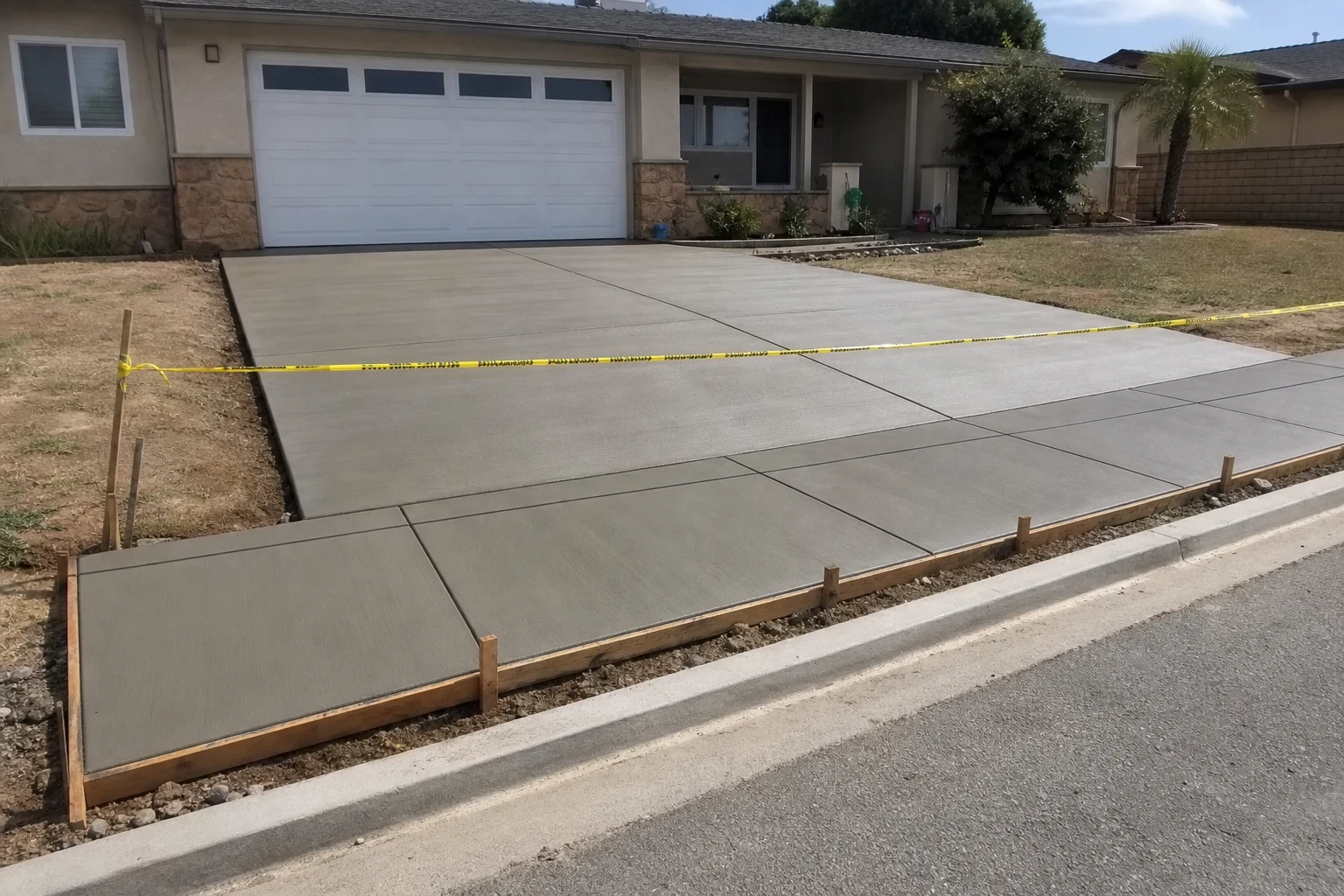
We plan the slope first, so rain runs to a drain or out through an opening instead of sitting against your stucco or a door threshold. Then we choose a finish with you: a simple broom finish, a smooth trowel edge, color, or a stamped pattern if you want the look of stone or tile.
If your old courtyard was damaged by something like a burst pipe or a fallen tree and you are thinking about an insurance claim, we photograph what we find and write up what has to come out and why. Your adjuster makes the coverage decision. Our job is to give you clear records to bring to that conversation.
What a courtyard pour includes
- Measured layout around your features
- We measure the space, mark doors, hose bibs, planters and any fountain, and set the finished height so it sits below door thresholds. You see the layout before demolition starts.
- Removal of the old surface
- Cracked concrete, loose pavers, brick or gravel comes out and is hauled away. We dig out soft soil and roots so the new slab has firm ground under it.
- Drainage built into the slope
- Every courtyard gets a planned fall away from the house. Where the space is fully enclosed, we can tie in area drains so water has a real exit.
- Base, reinforcement and joints
- A compacted base goes down first, then rebar or wire set at the right height. We cut or tool control joints in a pattern that suits the shape of the space, which keeps cracking in the joints where it belongs.
- Your choice of finish
- Broom, smooth, colored, exposed aggregate or stamped concrete. We bring samples and talk about how each one feels underfoot and how it holds up to sun and leaf litter.
- Cleanup and protection
- We cover walls, windows and plants near the pour, and leave the area swept and clear when we finish.
Signs your courtyard is ready for new concrete
Water pools near the house
If puddles sit against a wall or seep under a door after rain, the slope is wrong. New concrete is the chance to fix the grade properly.
Slabs lifted by roots
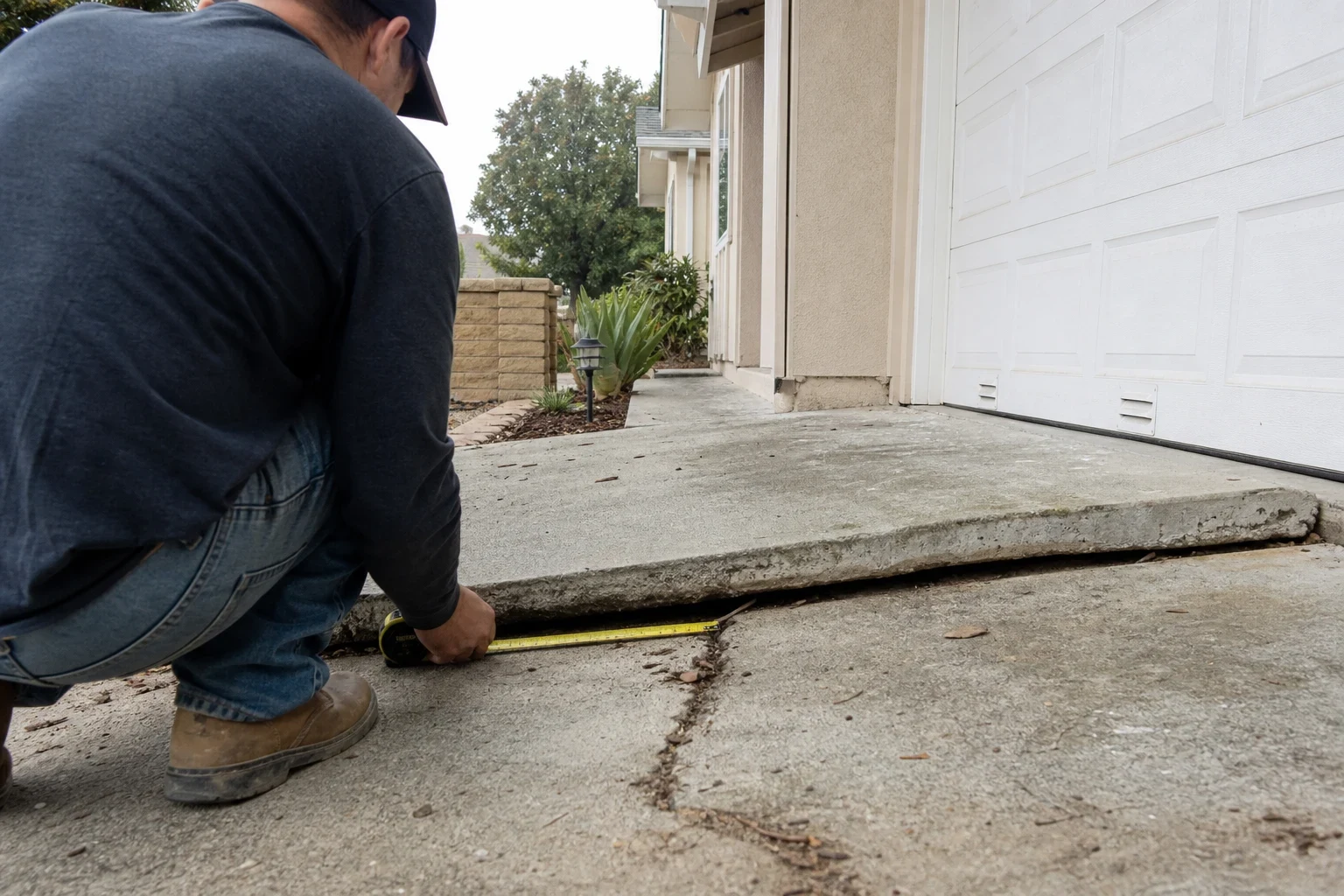
Tree roots can heave sections up and create trip edges. When a slab has tilted, replacing it with root barriers in mind gives you a flat surface again.
Pavers or brick that keep shifting
Loose pieces wobble, grow weeds and catch chair legs. A poured surface stays put and is easier to sweep.
Dirt or gravel that tracks inside
A courtyard right off the kitchen or living room should not send mud and grit across your floors every time someone walks in.
Damage after a covered event
A broken water line or a fallen tree can leave a courtyard cracked and sunken. We document the damage with photos and a written scope so you can share it with your insurer.
What moves the cost of a courtyard
No two courtyards are shaped the same, so the price follows the space and the finish rather than a flat rate. Our written estimate breaks out each part so you can see where the money goes and adjust if you want to.
Size and shape
Square footage matters, and so do curves, corners and cutouts around planters or columns, which take more forming time.
Access to the space
A courtyard with a wide gate is simpler than one reached only through a narrow side yard. Tight access may mean a concrete pump or more wheelbarrow trips.
What comes out first
Removing thick old concrete or brick costs more than clearing gravel. Roots and soft soil add digging and base material.
Finish and color
Broom finish is the simplest. Color, exposed aggregate and stamped patterns add material and labor.
Drains and permits
Area drains, connections to existing lines and any required permit or inspection are listed as their own items.
How your courtyard project runs
- 1
Visit and measuring
We walk the space with you, check how water moves, look at access through gates and side yards, and talk about how you want to use the courtyard. You get your quote by phone or at the visit, laid out line by line.
- 2
Prep and demolition
We protect nearby surfaces, remove the old courtyard and grade the soil. If the work needs a permit, such as new drainage tied to the house, we pull it.
- 3
Forms, base and steel
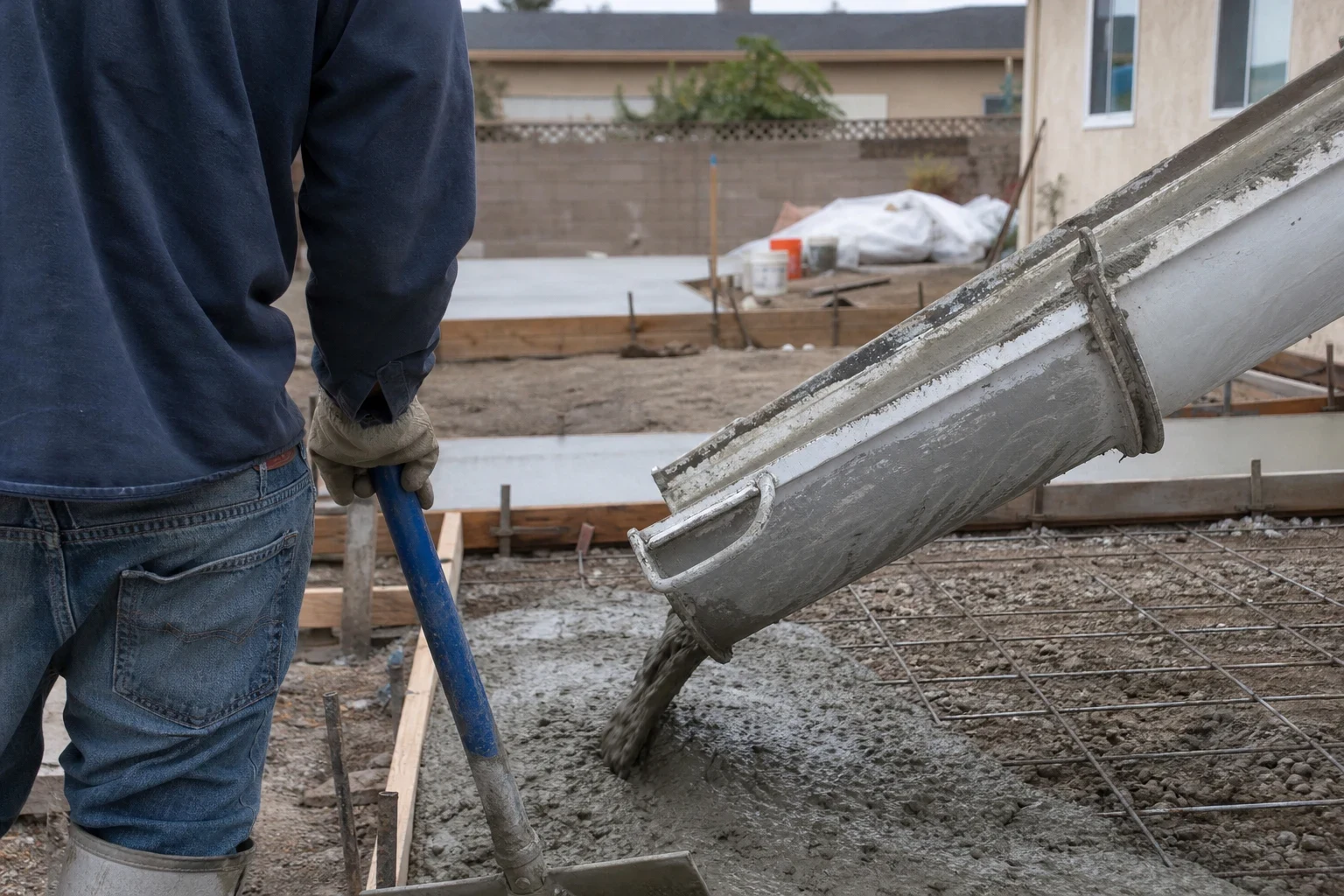
Forms go up along walls and planters, the base is compacted and reinforcement is set. We double check the slope before any concrete arrives.
- 4
Pour and finish
Concrete comes in by wheelbarrow or pump, depending on access. We place it, finish it in the texture you picked, and cut control joints.
- 5
Curing and walkthrough
We go over care with you and walk the finished courtyard together. Plan on light foot traffic after a day or two and furniture after about a week.
Courtyard questions we hear often
Do you have to bring concrete through my house?
No. We plan the route through a gate, side yard or over a low wall. If the space is fully enclosed, we use a pump with a hose that reaches in from the street or driveway.
Can you pour around my fountain and planters?
Yes. We form around existing features and leave clean edges. If a planter is in the wrong spot, we can talk about moving or removing it before the pour.
Will insurance pay for a new courtyard?
That depends on your policy and what caused the damage, and only your insurer can decide. What we can do is photograph the damage, explain what we found underneath and give you a written scope of work to pass along to your adjuster. We will not promise coverage we cannot control.
How do you keep water from running toward the house?
We set a steady slope away from walls and doors and check it with a level before pouring. In enclosed courtyards we add area drains so the water has somewhere to leave.
Should I choose stamped concrete or a plain finish?
Stamped concrete gives a stone or tile look and works well in a courtyard you see from inside. A broom finish costs less and offers good grip. We bring samples so you can decide in person.
Ready to plan your new courtyard?
Tell us about the space, how you want to use it and any damage you are dealing with. We will set up a visit, measure everything and walk you through the options.