ServicesDriveways
Concrete Driveways in Brea
We remove tired, cracked driveways and pour new concrete built on a compacted base with steel reinforcement. You get a written estimate before any work starts, and if damage came from a sudden event, we document it so your insurance conversation starts with clear facts.
A New Driveway Built From the Ground Up
Your driveway carries the weight of every car, delivery truck and trash bin that crosses it. When the slab has sunk, heaved or broken into pieces, patching rarely holds. A full tear-out and new pour gives you a level, solid surface that drains away from your home and looks right from the street.
Most of the work you never see. We dig out the old concrete, fix the soil and base underneath, set forms and steel, and only then place the new slab. A lot of the ground in north Orange County is expansive clay that grows as it soaks up winter rain and pulls back as it dries out in summer, which is why the base work under your slab decides how long the driveway lasts.
Some driveways fail because of something sudden, like a broken water line washing out the base or a vehicle or fallen tree cracking the slab. In those cases we take dated photos and measurements and explain what we found in plain terms. Your adjuster decides what the policy covers. We just make sure you have good information to hand them.
What Your Driveway Project Includes
- Demolition and haul-off
- We break up the old slab, load it out and take it away. The broken concrete goes to a recycler rather than a landfill whenever one is available.
- Grading and compacted base
- We remove soft soil, add crushed rock base and compact it in layers. The grade is set so water runs toward the street or a drain, not toward your garage or foundation.
- Rebar and forms
- Steel reinforcing bar goes up on small supports called chairs, which hold it near mid-depth in the concrete instead of letting it lie in the dirt where it cannot help. Forms are set to the exact shape and edges you approved.
- Pour, finish and control joints
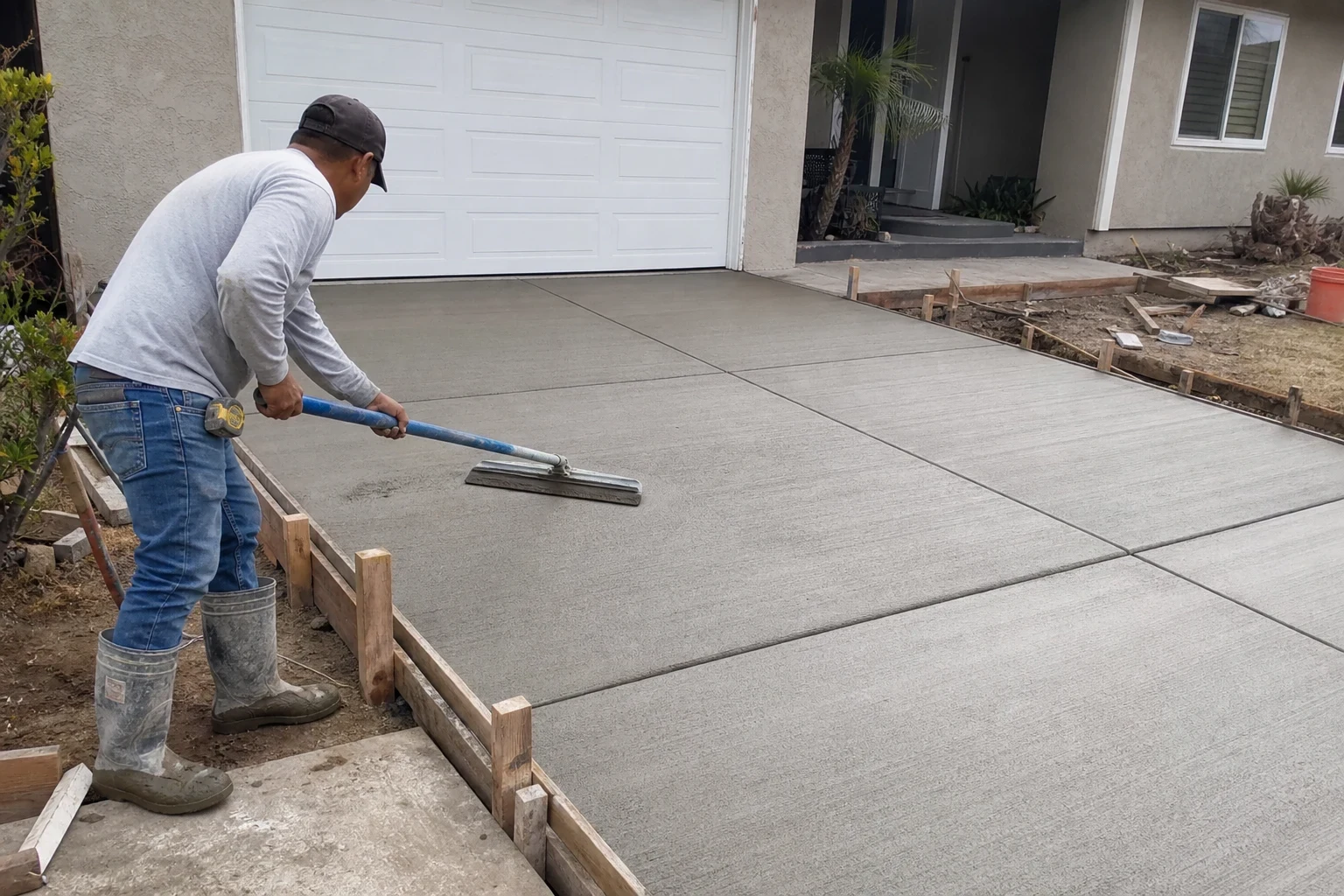
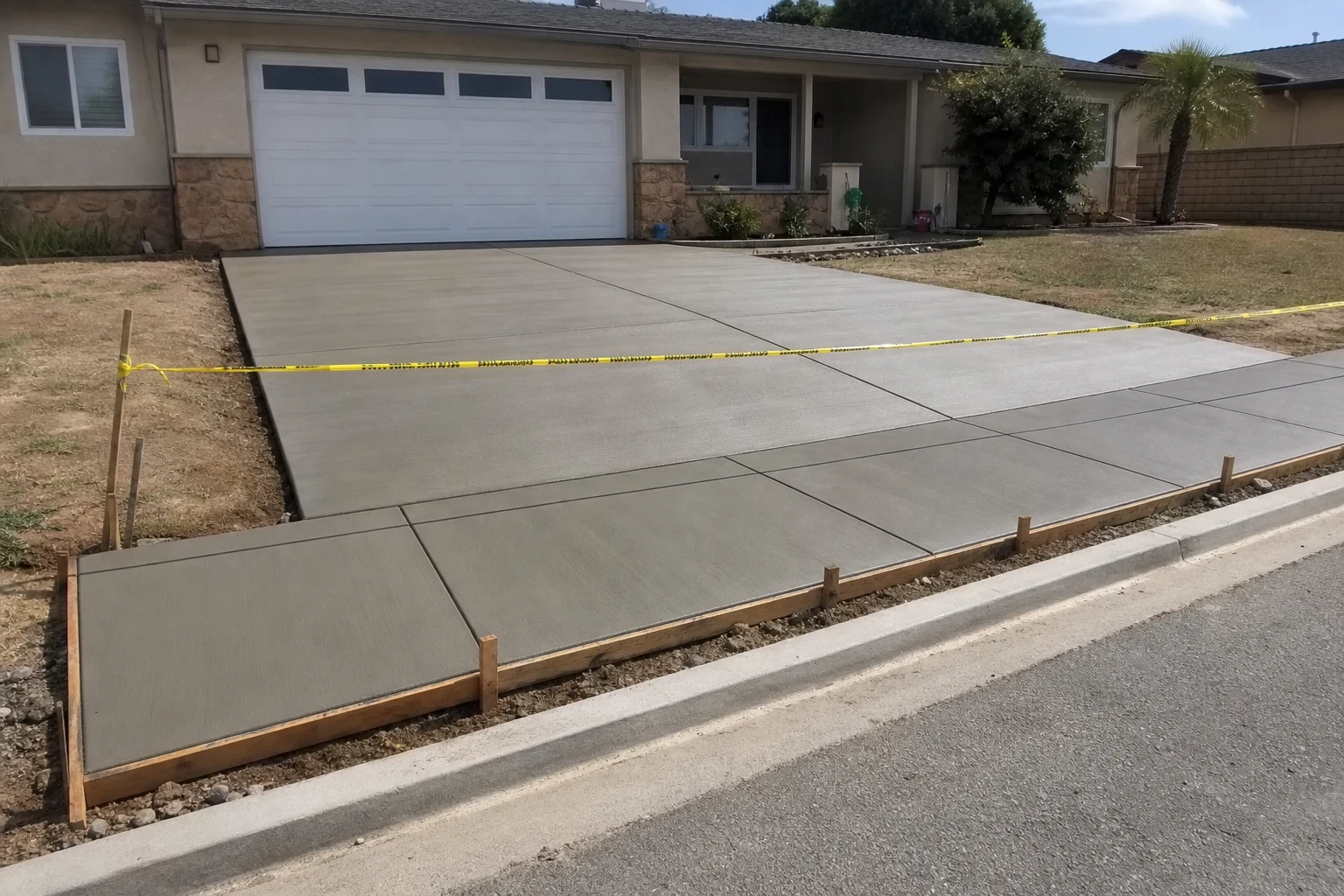
- We place and finish the concrete, usually with a broom finish for grip, and cut control joints so any shrinkage cracks follow straight lines instead of wandering across the slab.
- Approach and permit coordination
- When the work includes the apron where your driveway meets the street, we handle the city permit and inspection for that section.
- Cleanup and walkthrough
- We sweep up, remove forms and walk the finished driveway with you, including when it is safe to drive on.
Signs It Is Time for a New Driveway
Cracks you can fit a coin into
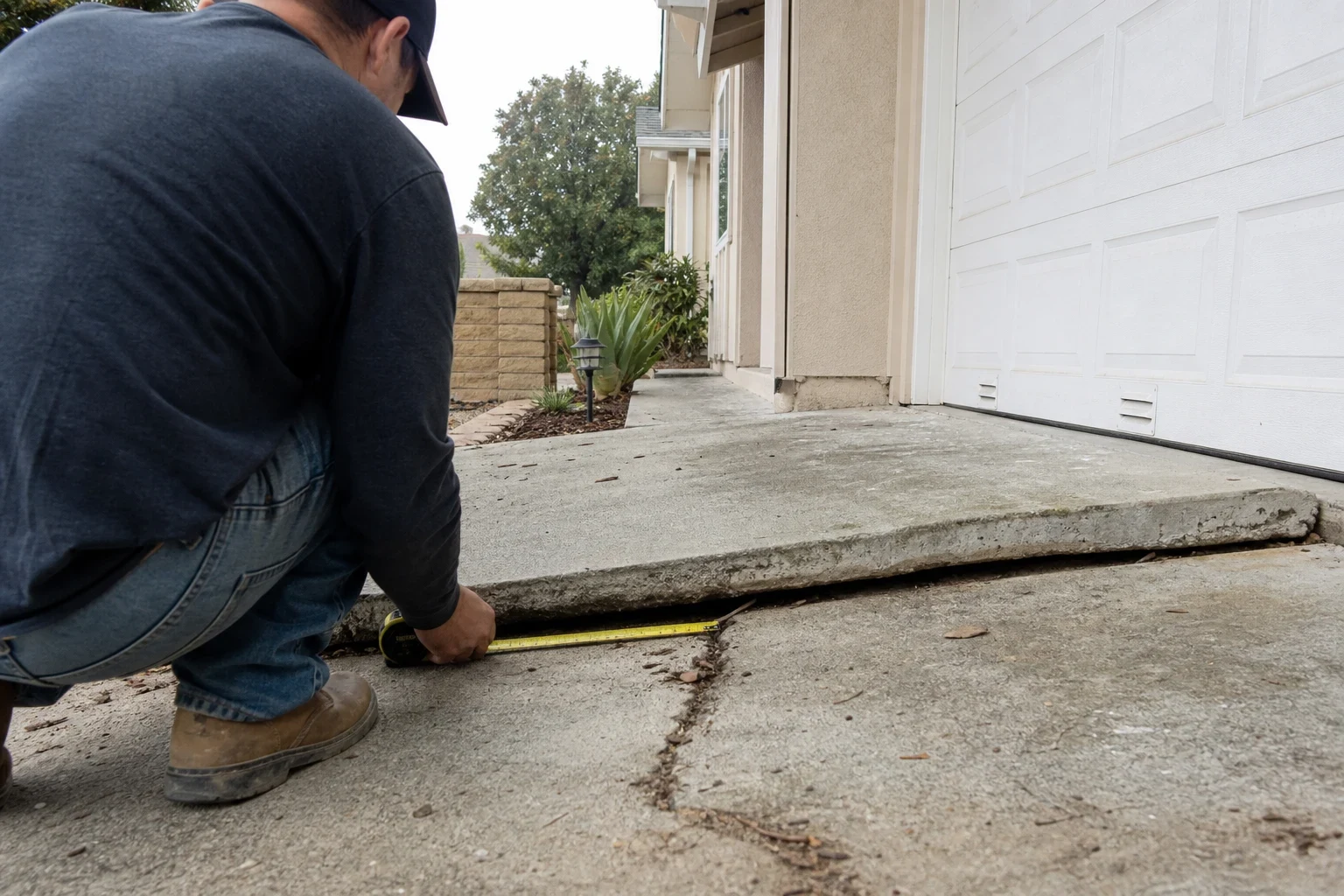
Hairline cracks are normal. Wide cracks, especially ones where one side sits higher than the other, usually mean the base below has moved.
Sunken or tilted sections
Slabs that have dropped near the garage or along the edges often point to washed-out or poorly compacted base. That is a base problem, and a new pour on new base is the lasting answer.
Lifting from tree roots
Roots from mature trees can push slabs up and create trip edges. We talk through root barriers or a new layout so the new driveway is not lifted the same way.
Water pooling or running toward the house
If rain collects in low spots or flows toward your garage, the grade is wrong. Regrading during a new pour fixes the slope at the source.
Flaking, crumbling surface
Spalling and exposed rock mean the surface has worn through. Once it spreads across the slab, replacing it makes more sense than chasing spots.
What Moves the Price of a Driveway
Every driveway is priced from what we measure on your property, not from a chart. The square footage matters, but what sits under the old slab and how easily we can reach it often matter just as much. Your estimate shows each of these as its own line.
Size and thickness
More square feet and a thicker slab mean more concrete and more steel. Driveways that carry RVs or work trucks need extra thickness.
Demolition and access
Thick old concrete, multiple layers or tight access for equipment add time to the tear-out.
Soil and base condition
Soft, wet or expansive soil may need more digging and more rock before we can pour.
Finish and decorative options
A broom finish is the simplest. Colored concrete, borders or a stamped pattern add labor and material. Our Stamped Concrete page covers those choices.
Permits and the street approach
Work on the apron at the street usually needs a city permit and inspection, which adds a fee and some scheduling time.
How a Driveway Job Runs
- 1
Site visit and measurements
We look at the slab, the drainage and the soil, take photos and measure everything. If you suspect insurance may be involved, tell us and we will note the damage and its likely cause carefully.
- 2
Written line-item estimate
You get each part of the job listed separately: demolition, base, steel, concrete, finish and any permit. You see what you are paying for before you decide.
- 3
Tear-out and base prep
Usually the first day or two. We protect your landscaping and garage door edge, remove the old slab, then grade and compact the new base.
- 4
Forms, steel and the pour
Once forms and rebar are checked, the concrete trucks arrive and we pour and finish. In hot months we start early in the morning so the concrete does not set too fast.
- 5
Curing and first use
You can usually walk on the slab after a day or so. We will tell you when it is ready for cars, typically about a week, and longer for heavy vehicles.
Driveway Questions We Hear Often
Will my homeowners insurance pay for a new driveway?
It depends on your policy and on what caused the damage. Policies often respond to sudden events, such as a burst pipe or a vehicle impact, and usually do not cover normal wear or settling over time. We document what we see and give you an itemized estimate, but the adjuster makes the coverage decision. We will never tell you a claim is a sure thing.
How long will I be without my driveway?
Tear-out and pour usually take a few days, depending on size and weather. After the pour, plan on about a week before parking on it. We will help you plan where to park in the meantime.
Can you pour over my old driveway?
We do not recommend it. Pouring over a cracked or sunken slab carries those problems up into the new concrete and raises the height at your garage and the street. Removing the old slab lets us fix the base properly.
Will the new driveway crack?
All concrete shrinks as it cures, so small cracks can appear. Control joints are cut so that shrinkage follows planned lines, and a well-compacted base with rebar keeps slabs from shifting apart.
Do you work outside Brea?
Yes. We pour driveways in Fullerton, Yorba Linda, La Habra, Placentia and other nearby cities. Our Service Areas page lists them all.
Ready to Replace Your Driveway?
Tell us what your driveway is doing and what you would like instead. We will set up a visit, measure it and walk you through a written estimate.