ServicesConcrete Backyards
Concrete Backyards in Brea
We plan and pour full backyard concrete, from grading and drainage to forms, steel and the final finish. If something your policy may cover ruined the old yard, such as a fallen tree or a broken water line, we photograph it and explain the claim steps plainly.
A Backyard You Can Actually Use
A concrete backyard covers most or all of the open ground behind your home, usually tying a patio area, side paths and a spot for the grill or a table into one connected surface. It suits families tired of a lawn that browns every summer and turns to mud every winter, and anyone who wants a yard that needs a broom more than a mower.
The part you see is the finish. The part that decides how it holds up is underneath: compacted base, the right slope away from your home, control joints in the right places and enough reinforcement for the soil. The clay soils common around north Orange County swell when wet and shrink when dry, so we plan the base and joints for that movement from the start.
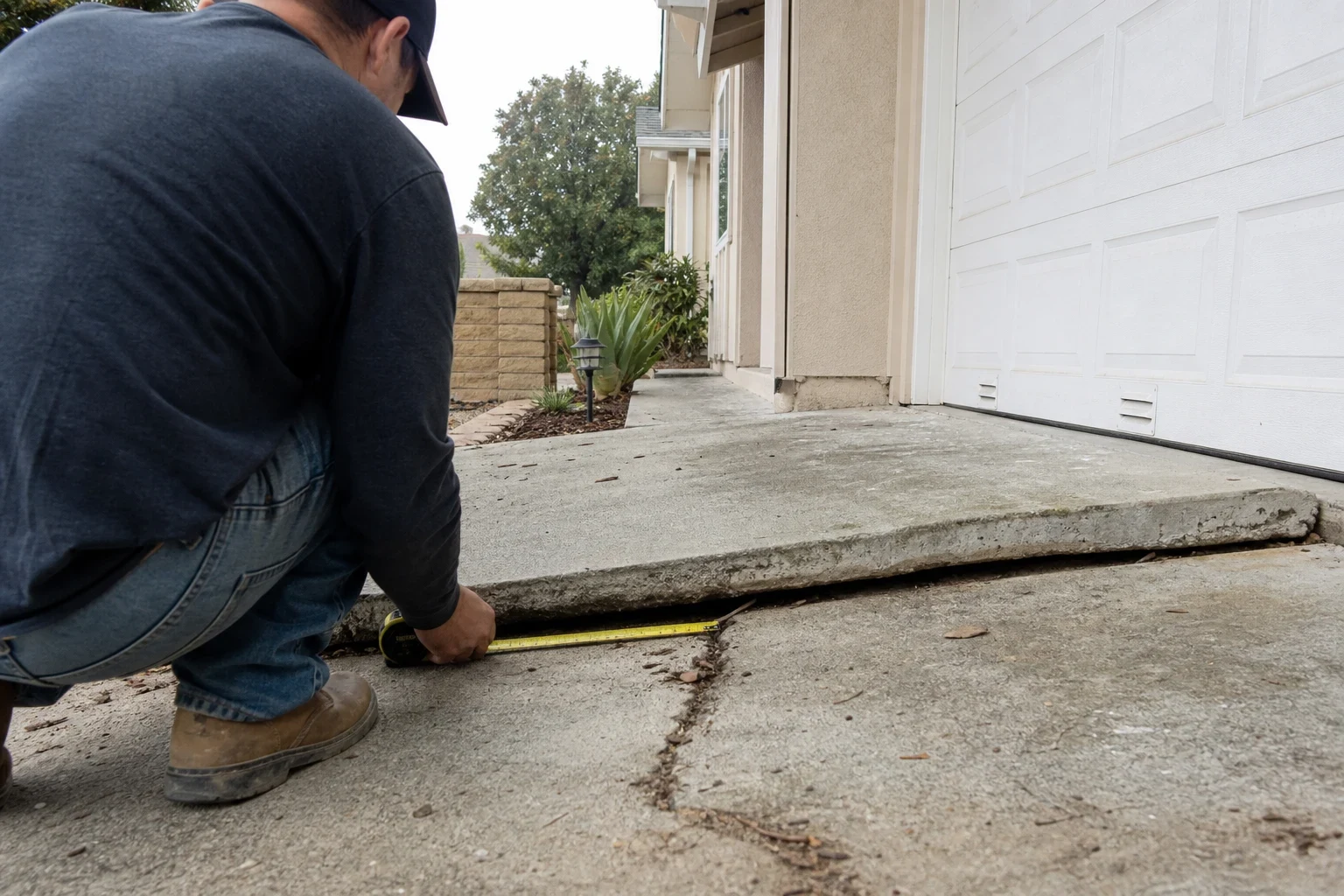
Some backyard jobs start with damage instead of a wish list. When that happens, we document what we find with photos and measurements and give you a written line-item estimate you can share with your insurer. Your adjuster decides what is covered. We just make sure they have clear information to work from.
What Your Backyard Project Includes
- 01
Layout and drainage plan
We walk the yard with you, mark where water goes now and set a slope that carries it away from your foundation and toward a drain or the street. If a drain line or channel drain is needed, it goes into the plan before any forms are built.
- 02
Removal and grading
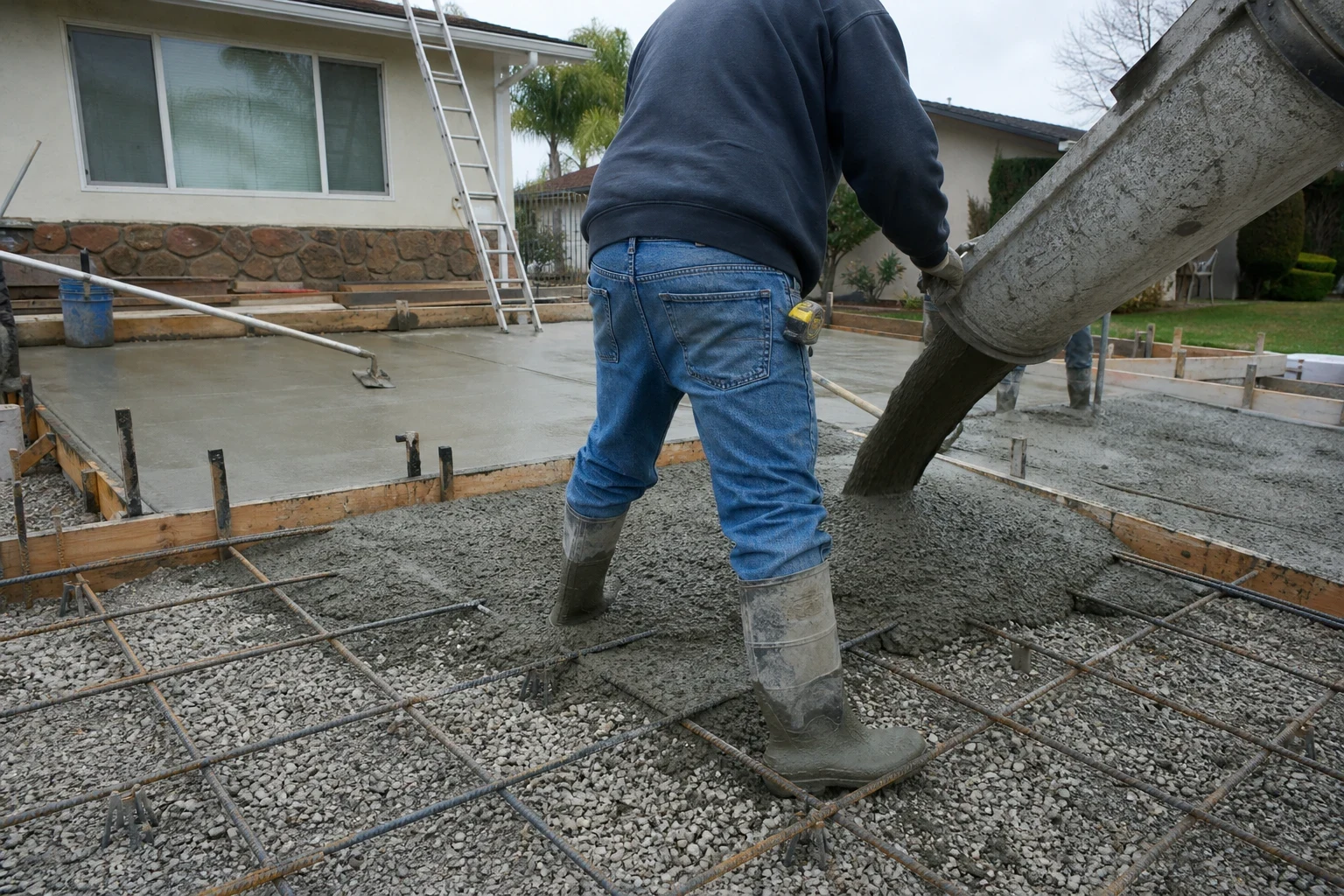
Old concrete, sod and loose soil come out. We grade to the planned elevations and compact the base in layers so the slab has firm, even support.
- 03
Forms, steel and joints
Forms set the edges and curves you chose. Rebar or wire goes in to suit the slab size and soil, and we plan control joints so any cracking follows straight lines instead of wandering across the yard.
- 04
Finish options
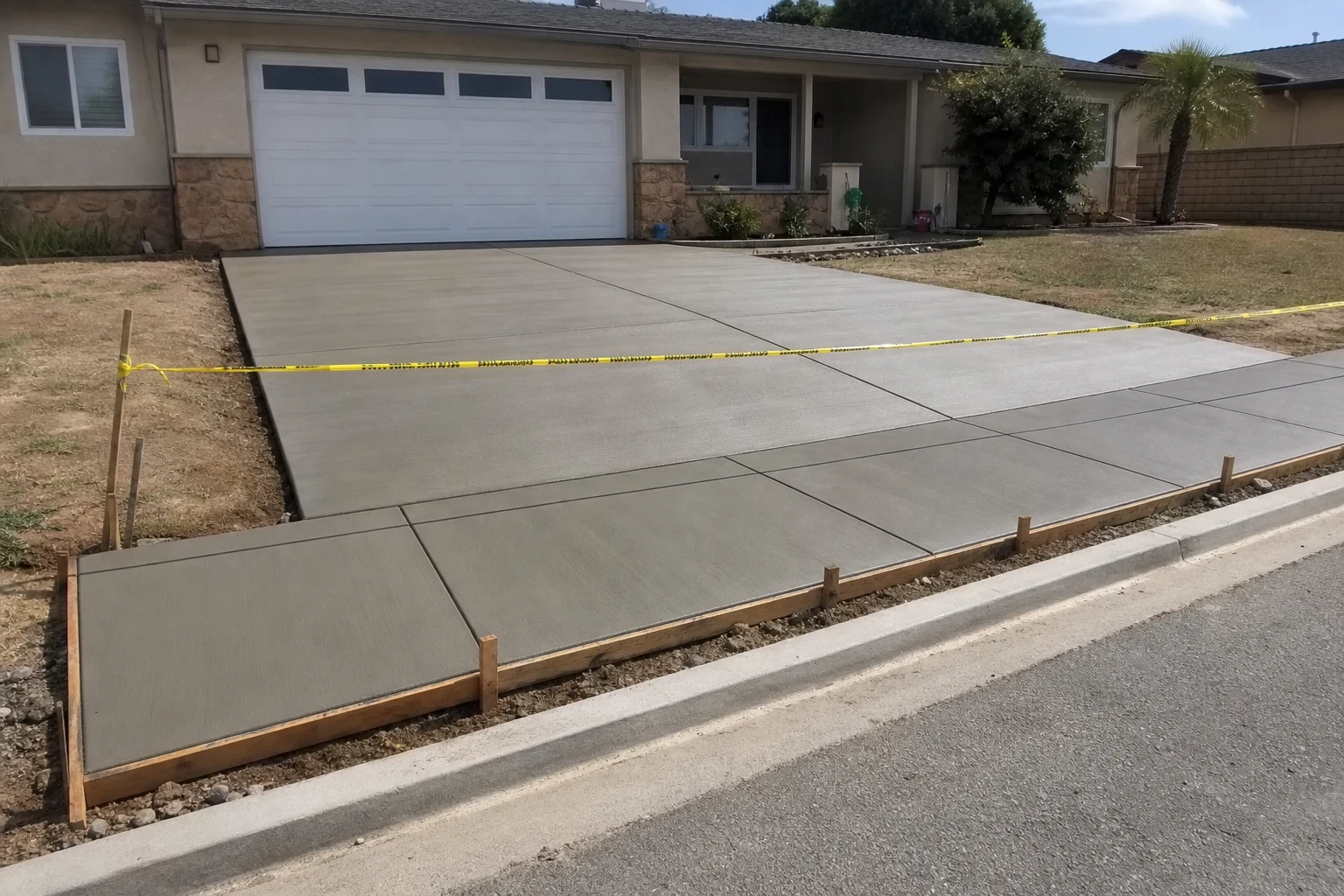
A broom finish gives good grip and stays cooler underfoot. You can also mix in stamped concrete for a seating area, or a smooth troweled band along the edges for a cleaner look.
- 05
Cleanup and curing guidance
We haul away debris, rinse the work area and tell you exactly when it is safe to walk on, set furniture down and run a hose across the new surface.
Questions about Concrete Backyards?
Call(714) 364-4450Signs It Is Time for a Concrete Backyard
Water pools near the house
If rain sits against your foundation or seeps toward the back door, the yard is sloped the wrong way. New concrete lets us correct the grade instead of working around it.
The lawn is more chore than yard
Dead patches, constant watering and muddy paw prints wear thin. Concrete with a few planting beds keeps green where you want it and drops the upkeep.
The old slab is past keeping
Tree roots, heaving clay or a failed water line can break concrete into uneven sections with sharp edges. When it is too far gone to keep, we remove it and pour new.
Damage from a recent event
A fallen tree, a burst pipe or heavy equipment from another project can wreck a yard. Photos taken before cleanup help your claim, so give us a call before anything is moved.
You want room for gatherings
Small, scattered pads make it hard to fit a table, chairs and a grill. One planned surface gives you space that flows.
How a Backyard Pour Comes Together
- 1
Visit and written estimate
We measure, check access for equipment and look at drainage and soil. You get a written line-item estimate, and if insurance is involved, our photos and notes come with it.
- 2
Prep days
Our crew removes old material, grades, compacts and builds forms. We protect walls, plants and pool equipment you want kept, and keep a clear path to your gate.
- 3
Pour day
Concrete arrives and is placed, leveled and finished while it is workable. In the warm months we often start early in the morning so the surface does not set too fast in the heat.
- 4
Curing and handoff
We cut or tool the joints and walk the finished yard with you. Most homeowners can walk on it within a day or two and set furniture down after about a week, though full strength takes longer.
What Shapes the Cost of a Concrete Backyard
Backyard projects vary more than most concrete work because each yard has its own size, slope and access. We price from the actual measurements and conditions, line by line, so you can see where the money goes. If insurance is paying part of it, the same estimate shows which items relate to the damage.
- Square footage and thickness
- More area means more concrete and labor. Spots that will hold a hot tub or heavy planters may need a thicker section.
- Access to the backyard
- A wide side gate lets a pump line or small equipment through easily. A narrow passage means more hand work and can add time.
- Removal and grade changes
- Breaking out old concrete, hauling soil or building up low areas all add to the job before any new concrete arrives.
- Drainage and finish choices
- Channel drains, added steel and decorative finishes like stamping or color each carry their own cost. A plain broom finish is the simplest option.
Concrete Backyard Questions
Will my homeowners insurance pay for a new backyard?
It depends on your policy and what caused the damage, and only your insurer can decide that. Sudden events like a falling tree are treated differently from slow wear or settling. We can document the damage and provide a written estimate, but we do not act as your adjuster or promise an outcome.
How do you keep water from running toward my house?
We set the slab to slope away from your foundation, usually toward a drain, a planter area or the street. Where the yard is flat or closed in, we add a channel drain so water has a defined path out.
Will the concrete crack?
Concrete shrinks as it cures, so some fine cracking is normal. Good base prep, reinforcement and well-placed control joints guide it into straight lines where it is hard to notice.
Can I keep some planting areas?
Yes. We can form out beds for trees, shrubs or a small garden, and leave spaces around existing trees you want to keep, with room for roots to grow.
How long will my backyard be out of use?
Prep and the pour often take a few days for a typical yard, depending on size and removal. After that, plan on light foot traffic for a couple of days and about a week before heavy furniture.
Let's Plan Your New Backyard
Tell us how you want to use the space and what is out there now. If damage is part of the story, we will explain how we document it for your claim.