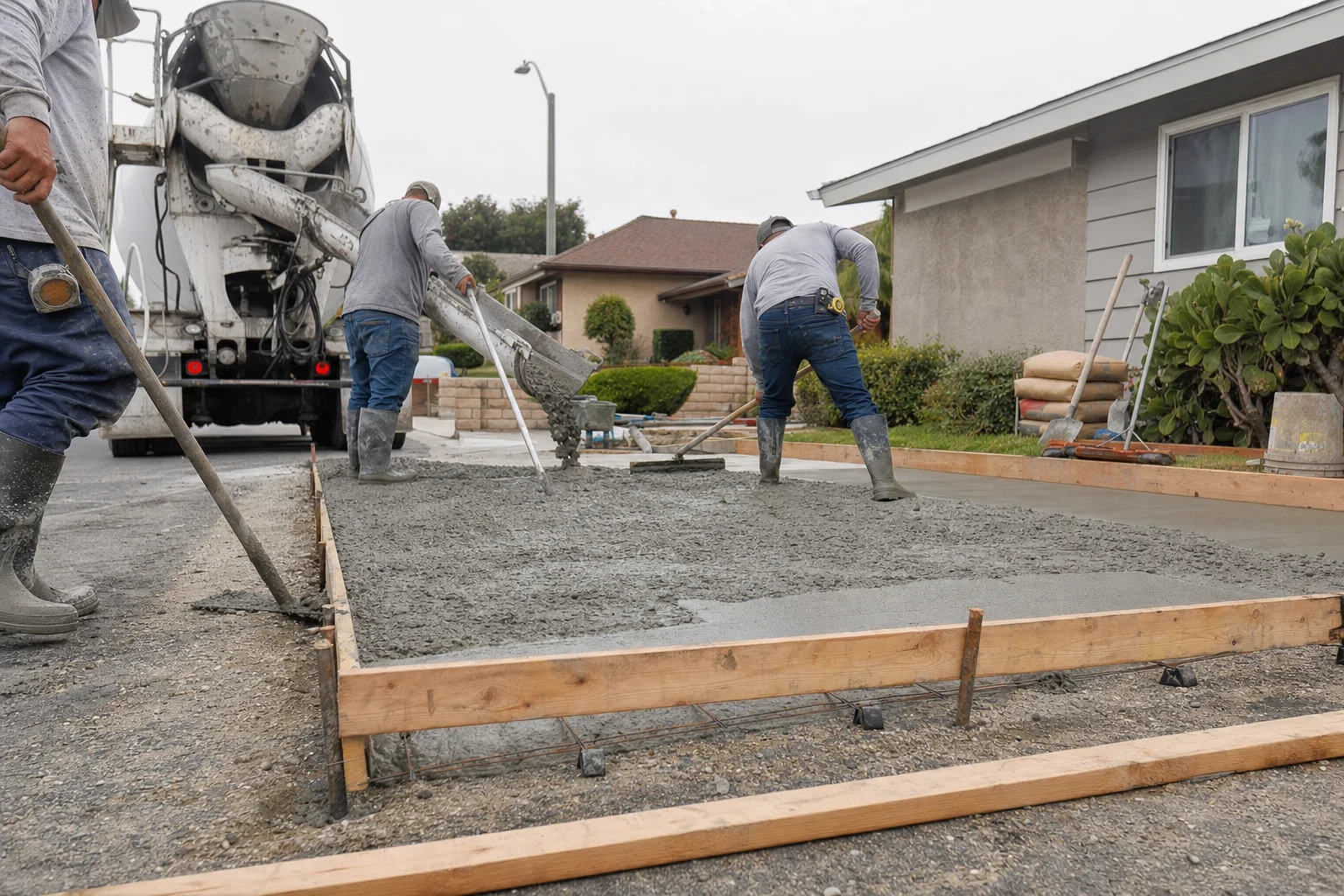
Is a 3 Inch Concrete Slab Enough for a Brea Home?
Thickness is the one choice you can't change after the pour, so it helps to know where the extra inch earns its keep.
Is a 3 inch concrete slab enough?
For most slabs around your home, no. Three inches can work for a small, light-duty pad like a trash can spot or a garden path, but patios, walkways and anything you walk on daily should be at least 4 inches, and driveways or RV pads need 5 to 6. Questions about your project? Talk it through at (714) 364-4450.
Where a 3 inch slab can actually work
A thin slab is not always a mistake. When the load is light, the area is small and the ground underneath is firm and well compacted, 3 inches can hold up for years.
The trouble is that projects tend to grow. The pad for the trash cans becomes a spot for a small shed, or the garden path starts carrying a wheelbarrow full of soil every weekend. If there is any chance the use will change, we suggest pouring for the heavier job now.
- A pad for trash and recycling bins
- A small stepping area or garden path with foot traffic only
- A base for a lightweight storage box
- A short landing that never sees wheels
Why 4 inches is the usual starting point
Concrete is strong when it is squeezed and weak when it bends. A slab bends a little every time weight sits on it, and the thicker it is, the better it resists that bending. Going from 3 to 4 inches gives the slab roughly three-quarters more bending strength, which is a big gain for one extra inch of material.
That is why 4 inches is the common standard for patios, walkways, side yards and courtyards. It handles furniture, barbecues, foot traffic and the occasional moving dolly without flexing enough to crack. It also leaves room for reinforcement to sit in the middle of the slab, where it does its job, instead of crowding the surface.
What thickness do driveways and RV pads need?
Wheels change everything. A car concentrates its weight on four small patches, and a slab that holds people just fine can crack under a vehicle parked in the same spot every night.
For driveways we usually pour 5 inches, sometimes more where heavy trucks park. RV parking pads typically go to 6 inches with rebar, because a motorhome or loaded trailer puts far more weight on each tire than a family car. Garage floors fall in the same range as driveways, since they carry the same vehicles.
- Patios, walkways, side yards: 4 inches
- Driveways and garage floors: 5 inches is common
- RV and boat parking pads: 6 inches with rebar
- Hot tub pads: often 4 to 6 inches, depending on the tub's filled weight
How the soil under your home changes the answer
Thickness is only half of a lasting slab. Much of north Orange County sits on clay soil that swells when the winter rains soak in and shrinks during the long dry summers. That movement pushes and pulls on the concrete, and a thin slab has less mass to resist it.
Before we pour, we check the ground, remove soft or organic soil, and build a compacted gravel base. On clay we pay close attention to drainage so water runs away from the slab instead of collecting under it. A good base under 4 inches of concrete will outlast a thicker slab poured on loose fill.
Other details that matter as much as thickness
Control joints give the slab a planned place to crack, so any cracking happens in a straight line inside a cut instead of wandering across the surface. A common rule is to space joints no more than about two to three times the slab thickness in feet, so a 4 inch slab gets joints every 8 to 12 feet.
Reinforcement, the concrete mix and curing all play a part too. Our dry, warm summers can pull moisture out of fresh concrete too fast, so we keep the surface damp or use a curing compound during the first days. When we talk through your project, we explain each of these choices in plain terms so you know what you are paying for.
- Rebar or wire mesh set in the middle of the slab, not lying in the dirt
- Joints cut or tooled at the right depth, about a quarter of the slab thickness
- A mix suited to the use, with stronger mixes for driveways
- Proper curing, especially for summer pours
More questions about slab thickness
- Do I need a permit for a backyard slab in Brea?
- Many simple patio slabs on private property don't need one, but work that touches the street, the public sidewalk or a driveway approach usually does. We check with the City of Brea for your specific project before we schedule the pour.
- Can you pour new concrete on top of my old 3 inch slab?
- It depends on the condition of the old slab. If it has shifted, sunk or cracked badly, the new layer will usually follow those problems, so removing it and pouring a new slab at the right thickness is often the better long-term choice.
- My thin slab cracked after a pipe leak. Will insurance cover a new one?
- Sometimes, depending on your policy and what caused the damage. Take clear photos of the cracks and the leak area before anything is moved, and we can explain what we see so you have a clear picture for your adjuster.
- How soon can I use a new 4 inch slab?
- Light foot traffic is usually fine after a day or two, and patio furniture after about a week. Vehicles should wait longer, and concrete keeps gaining strength for about four weeks, so we'll tell you what timing fits your slab and the weather during the pour.
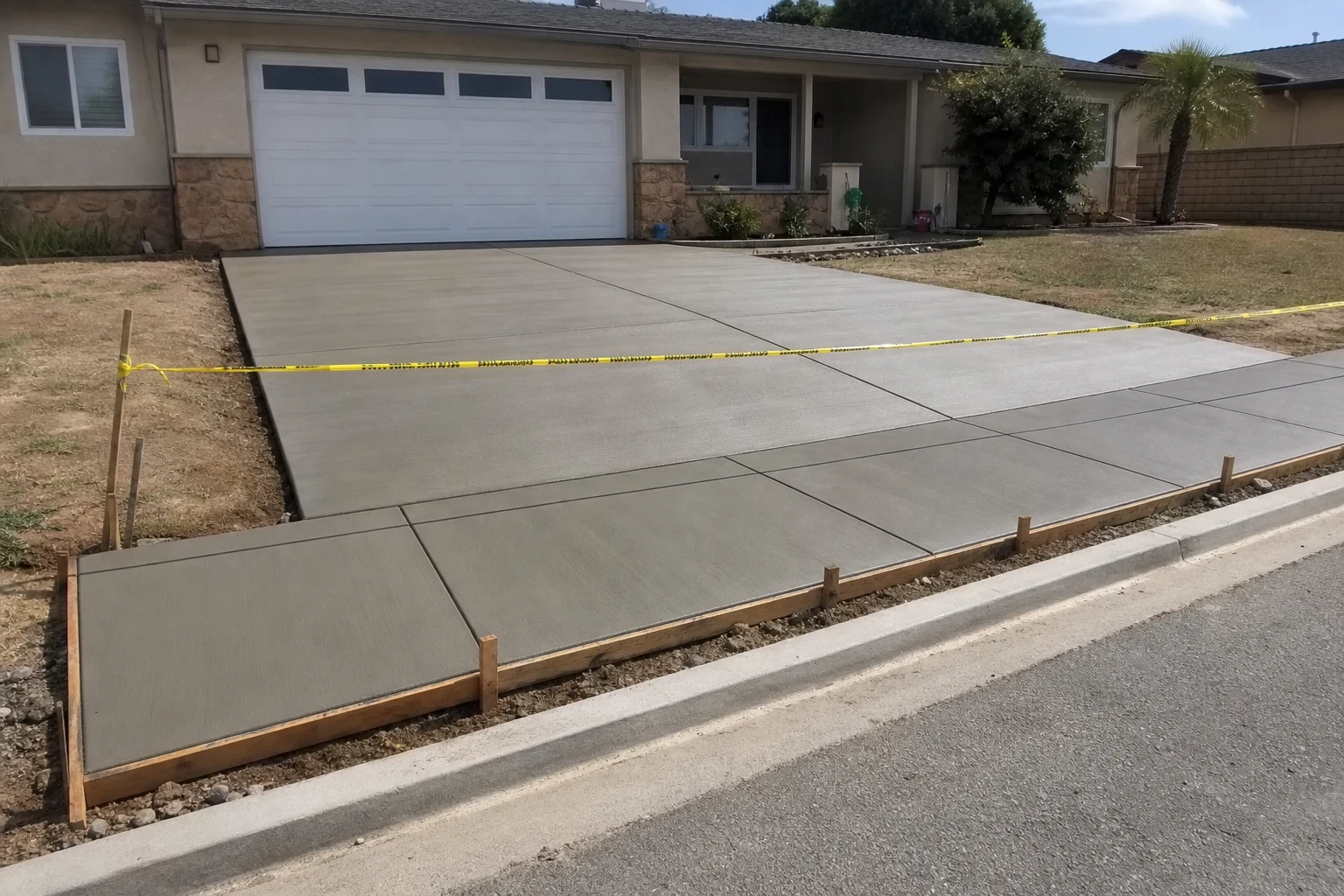
Not sure how thick your slab should be?
Tell us what the slab will hold and where it will go, and we'll explain the thickness, base and reinforcement that fit your home, then give you your quote by phone.